849

Author
Meat.Milk
Share on


Published on
2026 May 06
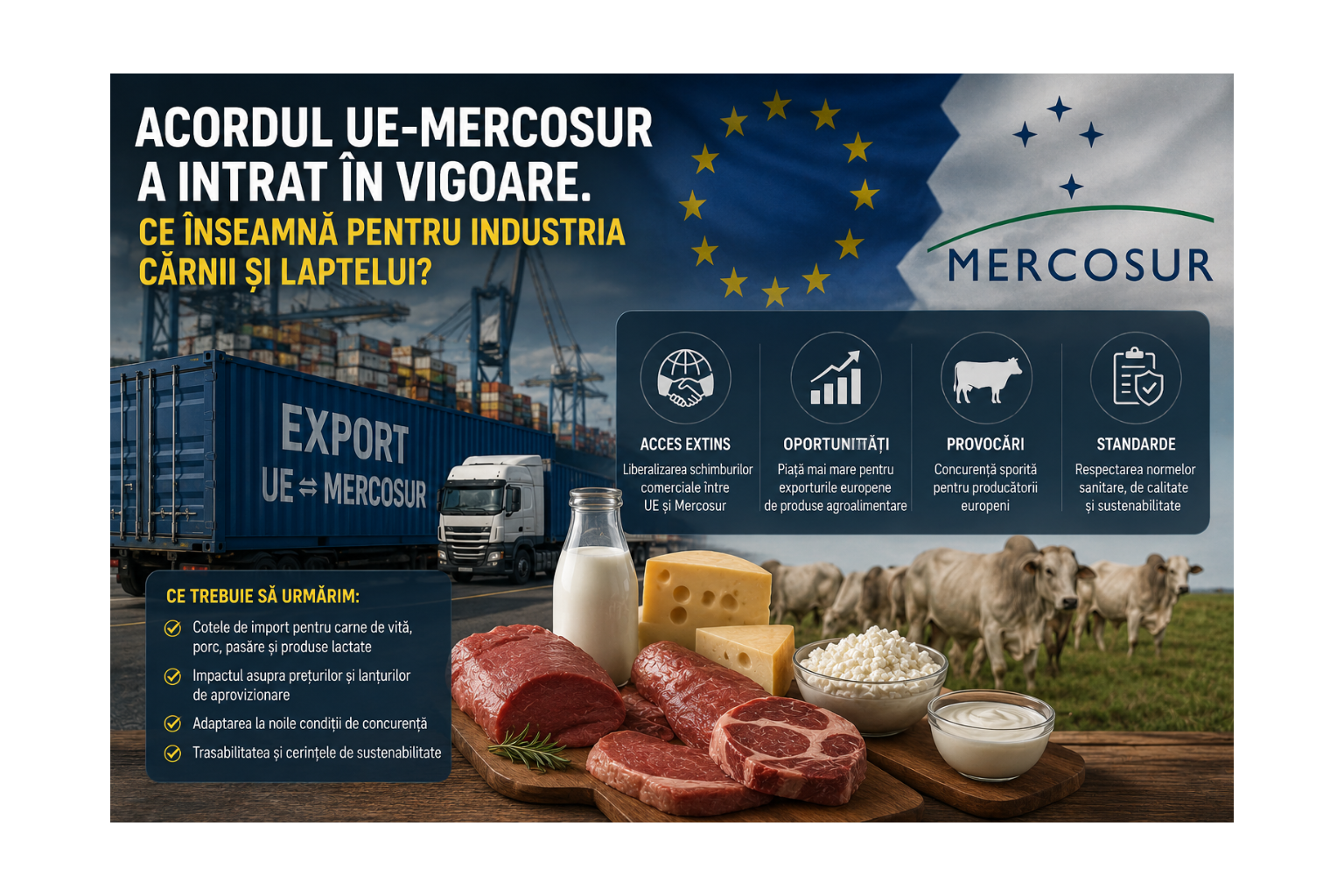
As of May 1, 2026, the trade agreement between the EU and the South American Mercosur bloc is being applied provisionally. After 25 years of negotiations, one of the largest free trade areas in the world is becoming a reality. But for farmers and processors in the meat and dairy industry, the outlook is far from triumphant.
The concrete threat: meat from South America
Brazil and Argentina are two of the world’s largest meat exporters — products obtained at significantly lower costs than in Romania, due to cheaper labor, vast agricultural land, and less restrictive environmental standards.
The agreement includes quotas and safeguard mechanisms for sensitive sectors. But even with these limitations, the pressure will be real. Small farmers and medium-sized processors — the backbone of Romania’s meat industry — will adapt much more difficultly than large corporations.
Retail prices will not fall — but producers’ margins will
A study published before the agreement entered into force clearly warned: cheaper imports from Mercosur will not translate into lower prices for consumers. The gains will be captured by large retailers, not passed on to buyers.
The worst-case scenario for the local industry: increased competition at entry, without any benefit in consumption. The Romanian producer, caught in the middle.
Dairy: lower exposure, but real indirect risk
The dairy sector is less directly exposed in the short term. Current imports from Mercosur are minimal. However, the risk comes indirectly: mixed cattle farms — meat and dairy — will feel the pressure on both production lines, without the financial capacity to offset it through exports.
What remains to be gained
15 Romanian geographical indications from the food industry — including traditional meat products — will be legally protected on South American markets. Products with geographical indication sell at prices two to three times higher. A real advantage, but accessible only to those who have already invested in traditional brands.
The agreement is not a guaranteed disaster. But neither is it good news without conditions. The future depends on how firmly Romanian authorities respond if import pressure turns into bankruptcies among small farms.
(Photo: AI GENERATED)
Did you learn something new from this article?
Read also: