2457

Author
Meat.Milk
Share on


Published on
2026 February 24
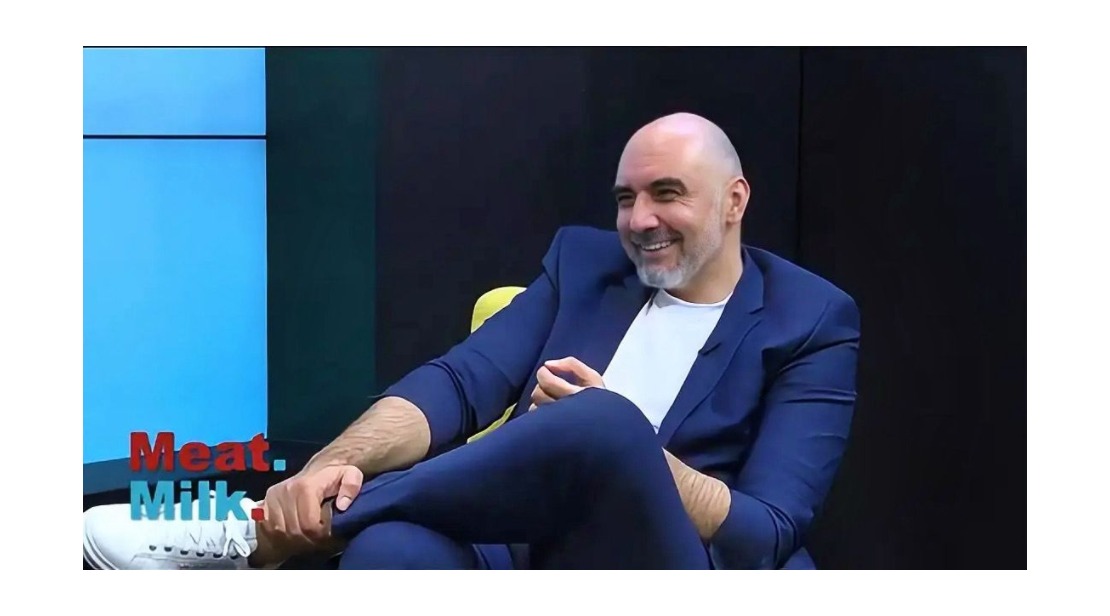
“The most important thing is that you can give people a purpose. Without a purpose, no one truly functions.”
The guest of this Meat.Milk. edition is Alexandru Stan, founder of TexTech. An entrepreneur who speaks openly about more than two decades of professional experience, marked by bankruptcies, relaunches, and difficult decisions.
Alexandru Stan’s professional journey has not been linear. He started early, coming from performance sports, then moved through technical jobs and sales, followed by food retail, distribution, and production. He built stores, developed a sandwich factory, and learned the mechanisms of direct trade. His first businesses brought growth, but also structural limits: wrong partnerships, financial pressure, and ultimately bankruptcy.
With permits rejected multiple times, no working capital, overdue rent, and employees waiting to find out whether there would still be a tomorrow, Alexandru Stan reached a point where the pressure was no longer only financial, but emotional. It was the moment when all past mistakes seemed to converge in one place. The difference was not made by a spectacular plan, but by the simple decision not to give up: a phone call made at the right time, a partner who responded, an authorization granted exactly when everything seemed closed.
After a significant financial loss and a second failure, he chose to rebuild everything on a different foundation: discipline, step-by-step development, and operational control.
“You don’t have as many problems as I have solutions. If you train your mind to look for solutions, it will find them.”
Today, TexTech operates in a competitive industrial segment where differentiation can no longer be achieved through price alone. The company develops more than 900 customized products, tailored to specific industrial and food-sector workflows.
The status of a protected unit is not, in TexTech’s case, an administrative formula. The integration of people with disabilities, including individuals with Down syndrome, requires reorganizing workflows, adapting the pace of work, and building a different internal culture.
The human dimension is visible in everyday details: in the patience required for training, in the redistribution of tasks so that each employee can contribute in a meaningful way, and in the acceptance that performance does not mean uniformity. For TexTech, inclusion is not a communication message, but a management decision that influences costs, timelines, and organization. It is a model in which social responsibility and industrial production coexist without being placed in opposition.
“If we want Romanian industry, we must produce here and assume the risk here.”
Did you learn something new from this article?
Read also: