2073

Author
Meat.Milk
Share on


Published on
2026 March 03
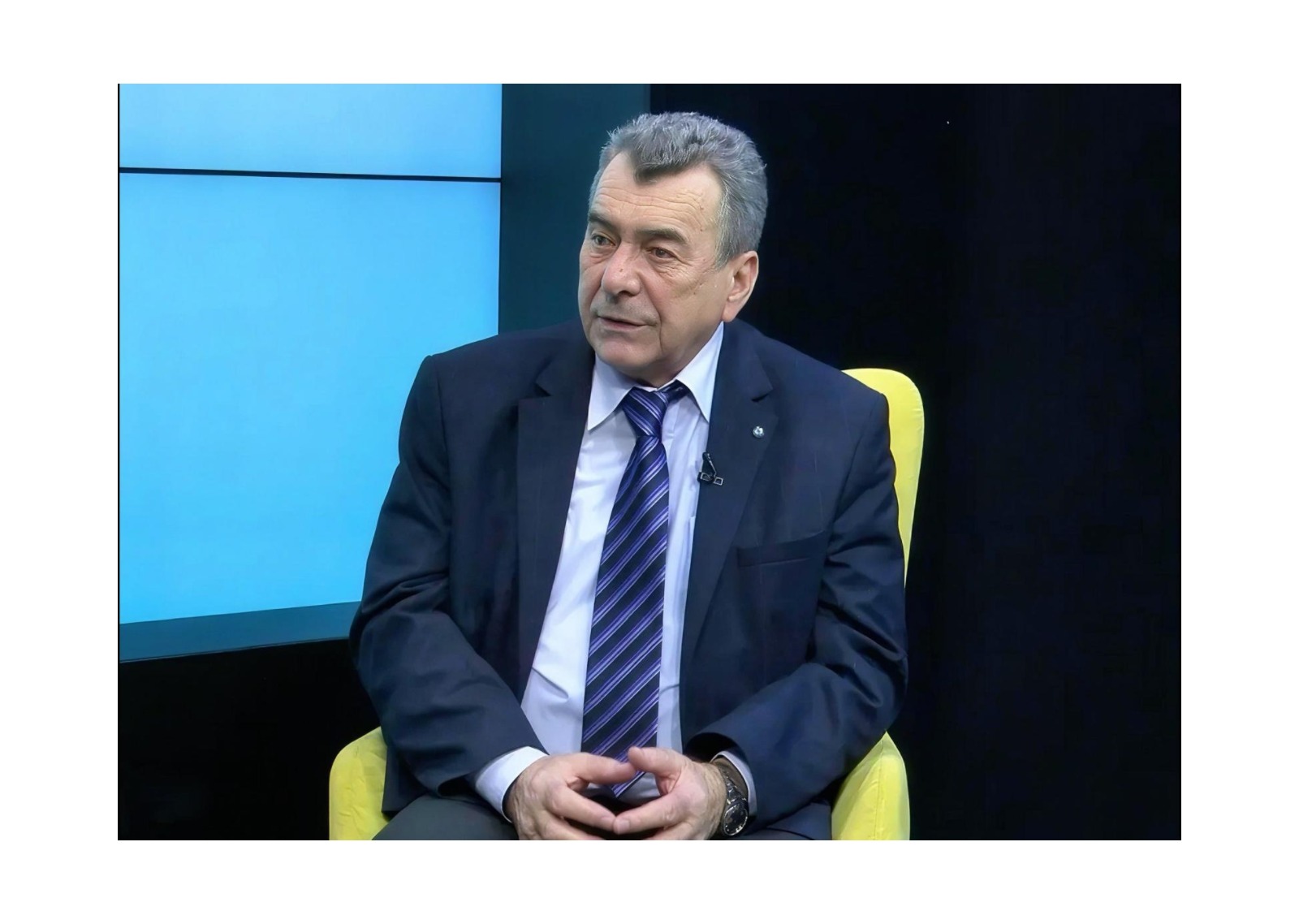
At a time when the food industry has returned to the center of debates on competitiveness, trade balance, and food security, the Meat.Milk. dialogue with Aurel Popescu – President of ROMPAN and ROMALIMENTA – goes beyond the scope of a professional retrospective. It is an exploration of the recent history of Romania’s milling and bakery sector, viewed through the direct experience of one of the few leaders who has fully traversed the country’s transformation.
He chose not to enter politics, yet negotiated with every government. He preferred to call things by their name, even when that proved uncomfortable.
A graduate of the Academy of Economic Studies in 1974, he entered production in a bakery considered modern for that time, though based on technology installed between 1962 and 1965. The sector had been modernized within the limits of the planned economy, but subsequent technological progress was slow. Flour extraction rates were limited, energy efficiency was low, and industrial flexibility was almost nonexistent.
In the 1980s, bread became an indicator of social equilibrium. Rationing, annual consumption exceeding 130 kg per capita, and the use of bread even as animal feed reflected the pressure on the system. For a young economist entering production, that period meant more than a professional stage: it was a form of public responsibility within a rigid system in which every technical decision carried social consequences.
After 1990, the institutional rupture was severe. County enterprises fragmented, and the temporary state monopoly over wheat generated major blockages. At that critical moment, the Minister of Agriculture directly requested that he identify a solution for organizing the sector. He convened directors from across the country, analyzed the existing legislative framework, and identified Law no. 21 of 1924 on associations as the legal basis for establishing a professional structure. On this foundation, the association of milling and bakery companies was created, the nucleus of what would become ROMPAN.
The initiative was presented to the Prime Minister, who subsequently issued the 1991 Government Decision regarding professional associations. The model became a precedent for organizing employers’ associations in post-December Romanian economy. From that moment on, Aurel Popescu was no longer merely a participant in the transition; he became one of its sectoral leaders.
When structures collapsed, he did not leave the system. He chose to rebuild it. He became the permanent interface between industry and state, between producer and decision-maker, between food stability and economic reality.
He navigated the wheat crises of 1992–1994, followed by the droughts and blockages of the early 2000s. In 2003, when Romania was forced to import nearly one million tons of wheat to cover its domestic deficit, the pressure was not only on the market, but also on the sector’s credibility. In those moments, the President of ROMPAN, Aurel Popescu, had to find rapid solutions: negotiations with authorities, recourse to state reserves, dialogue with external partners, and internal coordination. It was about ensuring continuity of production.
At the same time, he understood that long-term survival was impossible without modernization. He personally traveled to Switzerland and Austria to observe the technology transforming Western milling. He convinced his peers that retooling was not optional. He identified financing mechanisms and secured state guarantees for the first major investments. The first modernized mills and pasta factories became models for the rest of the sector.
In 2013, the reduction of VAT on bread from 24% to 9% marked one of the most important fiscal reforms in the food industry. The measure, consistently supported by Aurel Popescu in dialogue with the Ministry of Agriculture and the Government, had visible effects: lower final prices and increased formalization in a sector previously heavily affected by tax evasion. The extension of the reduced rate to all food products in 2015 confirmed the systemic impact of the decision. Together with approximately €1 billion in investments attracted for the modernization of milling and bakery, this reform remains one of the major structural achievements of the sector, managed under the coordination of ROMPAN President Aurel Popescu.
He represents a professional constant spanning more than five decades of Romanian economic history. He witnessed systems collapsing and others being built, endured shortages, modernization, crises, and reforms — and remained. For the milling and bakery sector, his name is linked to the continuity of a field that feeds an entire country every day. In an industry where stability means social balance, he chose responsibility over visibility and construction over withdrawal.
“I believe it is both destiny and dedication.”
A life in the service of Romanian bread and the food industry.
Aurel Popescu – President of ROMPAN and ROMALIMENTA.
Did you learn something new from this article?
Read also: