689

Author
Meat.Milk
Share on


Published on
2026 November 02
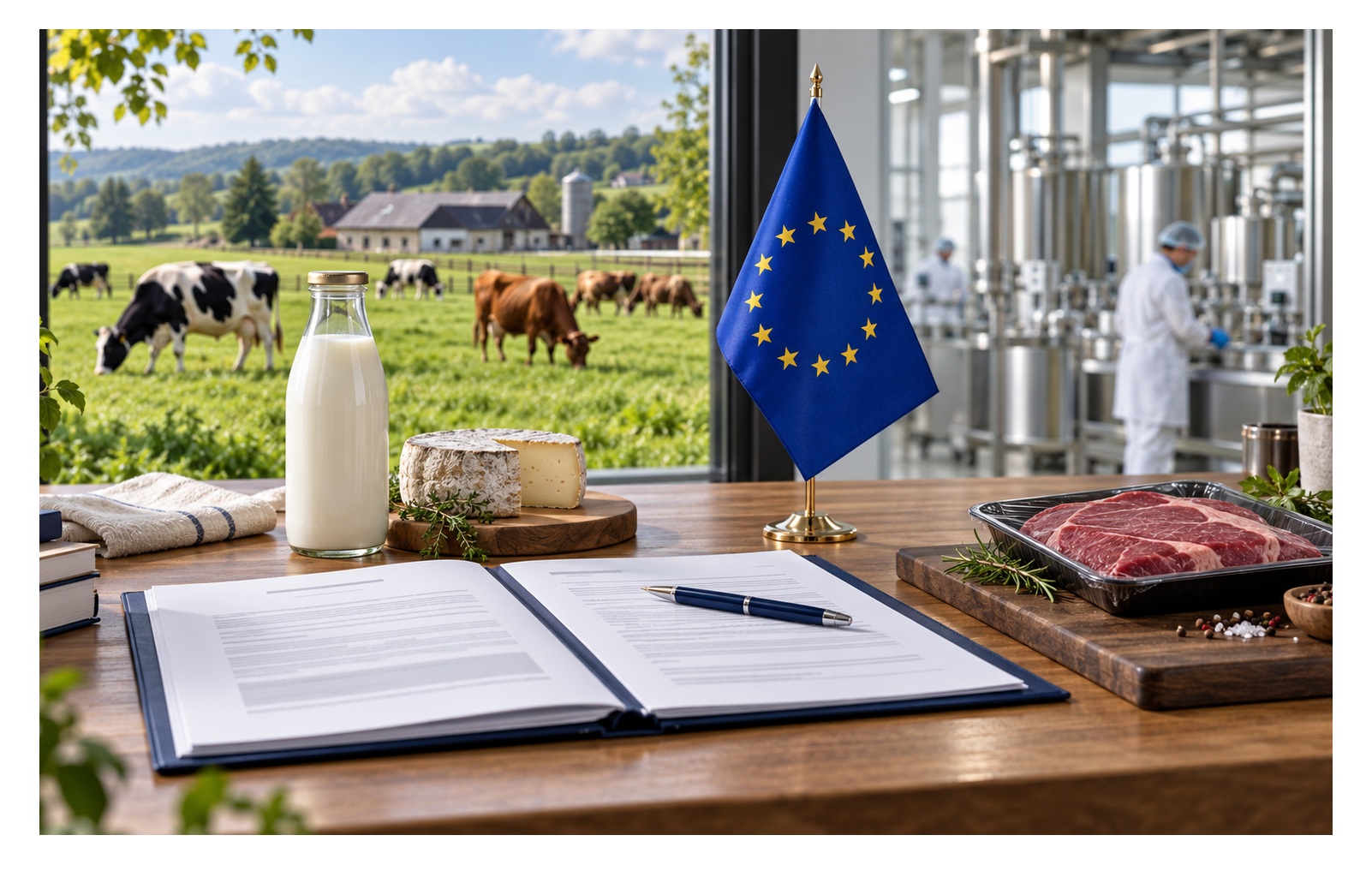
The conversion of cattle, pig and poultry feeding, veterinary treatments and factory cleaning and disinfection are all addressed in the European compromise on revising organic production rules. For operators, the implications are practical: how they organise their activities and under what conditions they can market their products as organic.
The provisional political agreement was reached on 20 October 2026. The Council documents dated 26 and 28 October provide a correction and the offer letter to the European Parliament. However, the procedure is not yet complete: the compromise requires formal adoption, and its provisions must not be treated as obligations already applicable.
Beef cattle: conversion without the three-quarters-of-lifetime calculation
The text provides for a 12-month conversion period for bovine and equine animals intended for meat production, removing the additional requirement that this period represent at least three-quarters of the animal’s lifetime. The change aims to ensure more consistent application and reduce administrative complexity. It does not abolish conversion.
Also relevant to meat and dairy farms is the amendment to the withdrawal period following the use of chemically synthesised allopathic veterinary medicines, including antimicrobials. The compromise retains the doubling of the relevant withdrawal period but removes the wording imposing a minimum of 48 hours even when the normal withdrawal period is zero. The text distinguishes between use in accordance with the marketing authorisation and use outside its terms.
Protein feed: conditional flexibility, not a blanket derogation
For pigs and poultry, the compromise allows the use of certain non-organic protein feed until 31 December 2036 where farmers cannot source it exclusively from organic production and the competent authority confirms insufficient availability.
The conditions are cumulative: unavailability in organic form, production or preparation without chemical solvents, use limited to specific protein compounds, and a ceiling of 5% over a 12-month period. From 2031, the Commission could amend the deadline through delegated acts, based on information about availability. This flexibility should therefore not be interpreted as permission to replace the entire feed ration.
In the factory: more flexible cleaning and disinfection, careful labelling
For processing and storage, the text removes the requirement for cleaning and disinfection products to be authorised through restrictive lists specific to organic production. The reasons include the diversity of facilities and the need to comply with equipment manufacturers’ specifications.
For imports from countries whose systems are recognised as equivalent, the agreement distinguishes between marketing a product as organic and using the EU organic logo. Additional requirements are stipulated for use of the logo, including those concerning animal welfare and processing methods.
For Romanian operators, the next step is to compare the final text with farm procedures, supplier documentation and labelling rules. Preparations can begin now; changes to practices must be guided by the adopted legislation and its implementation timetable.
(Photo: AI GENERATED)
Did you learn something new from this article?
Read also: