1173

Author
Meat.Milk
Share on


Published on
2026 January 30
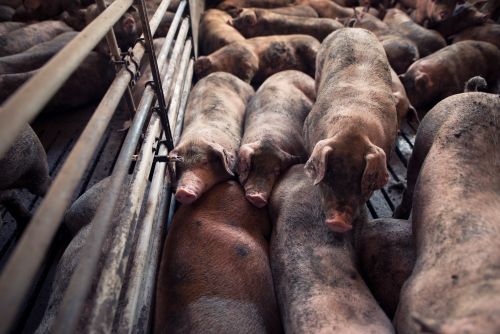
In 2026, pork remains the most vulnerable segment of Romanian livestock farming, despite the stabilization of the sanitary-veterinary context. The problem is no longer exclusively African swine fever, but the absence of a critical mass of commercial farms capable of supporting domestic processing and delivering consistent volumes.
The mechanism is structural. Pork production requires significant investment, strict biosecurity, and relatively fast production cycles that are highly sensitive to shocks. After years of contraction, the breeding base is insufficient, and rebuilding livestock numbers requires capital, time, and legislative predictability. In the absence of these elements, investment decisions continue to be postponed.
Eurostat data show that Romania’s pig population remains significantly below its 2018 level, while domestic production covers less than half of processing demand. According to FAO, Romania ranks among the European Union member states with the highest dependence on pork imports. Available scenarios for 2026 point to a slow recovery in livestock numbers, insufficient to structurally alter the trade balance.
The implication for the industry is clear: without coherent programs to rebuild commercial farms, investments in breeding capacity, and genuine integration with processing, pork will remain a segment dependent on external markets and exposed to price volatility.
(Photo: Freepik)
Did you learn something new from this article?
Read also: