217

Author
Meat.Milk
Share on


Published on
2026 November 04
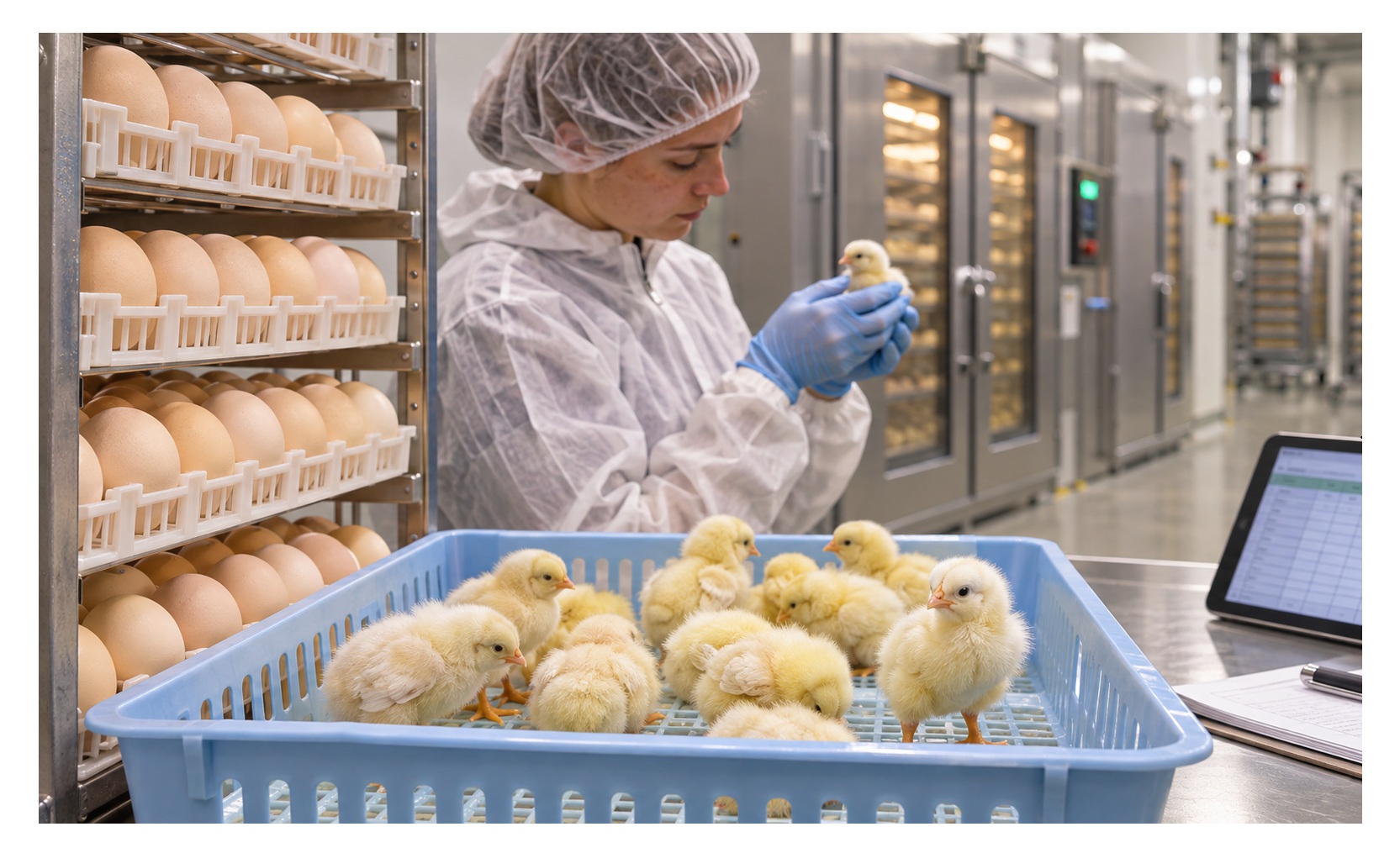
Developments in the poultry market begin before birds reach fattening farms. Eggs placed in incubation and chicks intended for use provide early information about activity in the sector, but must be interpreted separately from meat production.
Eurostat data for August 2026 show that Romania recorded 29.30 million eggs placed in incubation in the category of chicks of meat broiler breeds intended for fattening. Compared with August 2025, this represents an increase of 31.3%, calculated from the published figures.
For the separate indicator “chicks for use”, Romania recorded 22.54 million birds, 36.5% above the level in the same month of 2025. The figures in the Eurostat database are expressed in thousands; the volumes presented here have been converted into millions.
Faster growth, a different scale of production
In the same category, the number of chicks for use reached 142.86 million in Poland, 69.80 million in France, 68.12 million in Spain and 58.64 million in Germany in August.
Compared with August 2025, the calculated changes were +16.9% in Poland, +5.7% in France, +2.5% in Spain and +4.9% in Germany. The figures for Poland and Germany, and those for August 2026 in Spain, are flagged as provisional in the dataset consulted.
Romania therefore recorded a higher growth rate in this specific comparison. However, the difference in scale remains considerable, and a single month does not establish the trend for the whole year.
Two stages, not a single outcome
Eurostat distinguishes between eggs placed in incubation and chicks hatched for use. It considers hatchery statistics, alongside trade in chicks, an early source of information for anticipating poultry production.
The ratio between these two figures for the same month should not automatically be interpreted as a hatchability rate: the eggs set and the chicks reported do not necessarily belong to the same biological batch.
A signal for the industry, not a price forecast
For feed suppliers, farms, slaughterhouses and processors, the data warrant monitoring capacity and supply flows. On their own, they do not demonstrate a proportional increase in the amount of meat available or a future fall in prices.
Commercial interpretation also requires information on trade in chicks, the numbers of birds reared, slaughterings and the weights achieved. Hatcheries indicate the direction of activity; the meat market takes shape in the stages that follow.