1069

Author
Meat.Milk
Share on


Published on
2026 March 06
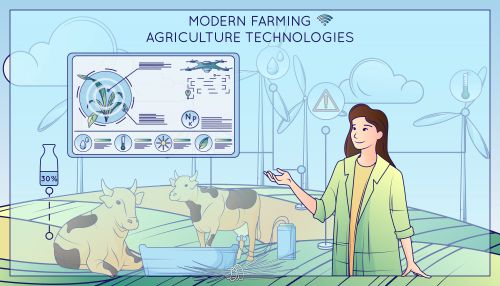
In 2026, digitalization is becoming operational infrastructure for the food industry, particularly in the meat and dairy sectors, where traceability and food safety are essential. According to European Commission data on the digital economy, approximately 60% of food companies in the European Union use integrated IT systems to manage production and traceability, and investments in digitalization in the European food industry have grown steadily since 2020.
European legislation—established through Regulation (EC) No. 178/2002 on food safety and Regulation (EU) 2017/625 on official controls—requires operators to be able to rapidly identify the origin of raw materials and the path of products within the food chain. In practice, this requirement involves the implementation of integrated IT systems, ERP platforms, digital batch management and logistical monitoring of product flows.
The economic impact of digitalization is direct. Analyses by the European Commission on the digital transformation of the agri-food sector show that the implementation of IT systems can reduce operational losses by 10–15% and logistics costs by up to 20%, through optimized production planning and more efficient inventory management.
In 2026, digital infrastructure is becoming as important as industrial infrastructure. In a sector where food safety and transparency are critical, the competitiveness of operators no longer depends solely on processing capacity, but also on the ability to manage information quickly and accurately across the entire food chain.
(Photo: Freepik)
Did you learn something new from this article?
Read also: