1830

Author
Meat.Milk
Share on


Published on
2026 April 07
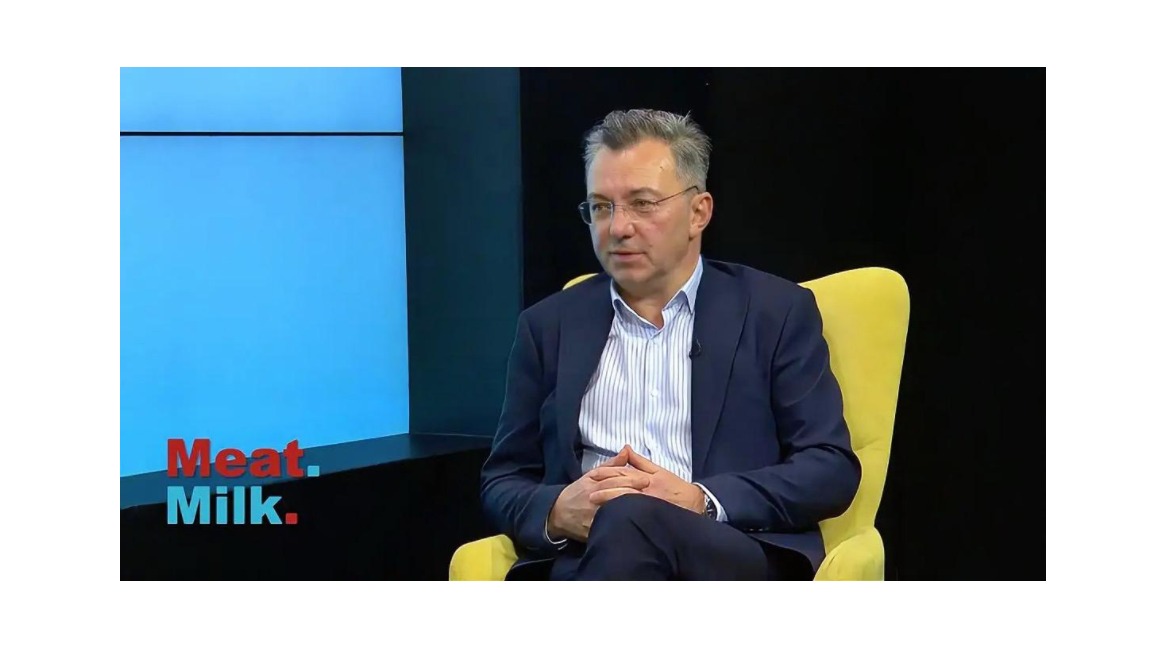
Feliciu Paraschiv is the founder and CEO of Paco Supermarket, one of the most relevant independent retail chains in Romania, and Vice President of the National Association of Small and Medium-Sized Retailers in Romania, an organization that represents independent merchants at the national level.
Feliciu Paraschiv’s entrepreneurial journey begins in a context atypical for the retail sector. Trained in the naval system from the age of 14, a graduate of the “Mircea cel Bătrân” Naval Institute in Constanța, he sailed for seven years as a long-haul marine engineer officer. The professional environment in which he began his career was characterized by technical rigor, discipline, and a high level of operational responsibility. This stage played a defining role in shaping his working style, which he later transferred into entrepreneurship. “I believe business was easier than life at sea,” he summarizes the difference between the two experiences.
In 1995, in Odobești (Vrancea), he opened his first store, with limited resources and in an still unstable economic context. The subsequent development of the Paco Supermarket network was achieved gradually, through reinvestment of capital and without significant reliance on external financing. Today, the company operates approximately 20 stores, with around 500 employees and an estimated turnover of over 50 million euros, according to data publicly communicated by the company. In industry rankings, Paco positions itself among the relevant retail networks and remains one of the most important independent chains in Romania.
From his position as Vice President of the National Association of Small and Medium-Sized Retailers in Romania, Feliciu Paraschiv directly participates in representing the interests of independent merchants within an economic framework dominated by large networks. His experience combines both operational and institutional levels, offering a practical perspective on how market access, commercial conditions, and the administrative framework influence the balance between local and international capital.
In his current activity, he operates in a sector where retail no longer means just selling, but also decision-making. Which products reach the shelf, under what conditions, and at what price directly influence producers’ access to consumers. In this context, the role of local retailers becomes important through their ability to maintain a balance between producers, consumers, and the competitive pressure exerted by large networks.
The evolution of Paco Supermarket reflects a development model built gradually, based on operational control, adaptability, and proximity to the customer. In a changing market, where cost pressures and the administrative framework constantly influence business decisions, maintaining an independent retail chain becomes an indicator of the resilience of local capital. In this dynamic, Romanian retail remains a relevant element for the functioning of the economy, through its role in the distribution of value and in supporting a coherent internal economic circuit.
Did you learn something new from this article?
Read also: