180

Author
Meat.Milk
Share on


Published on
2026 October 28
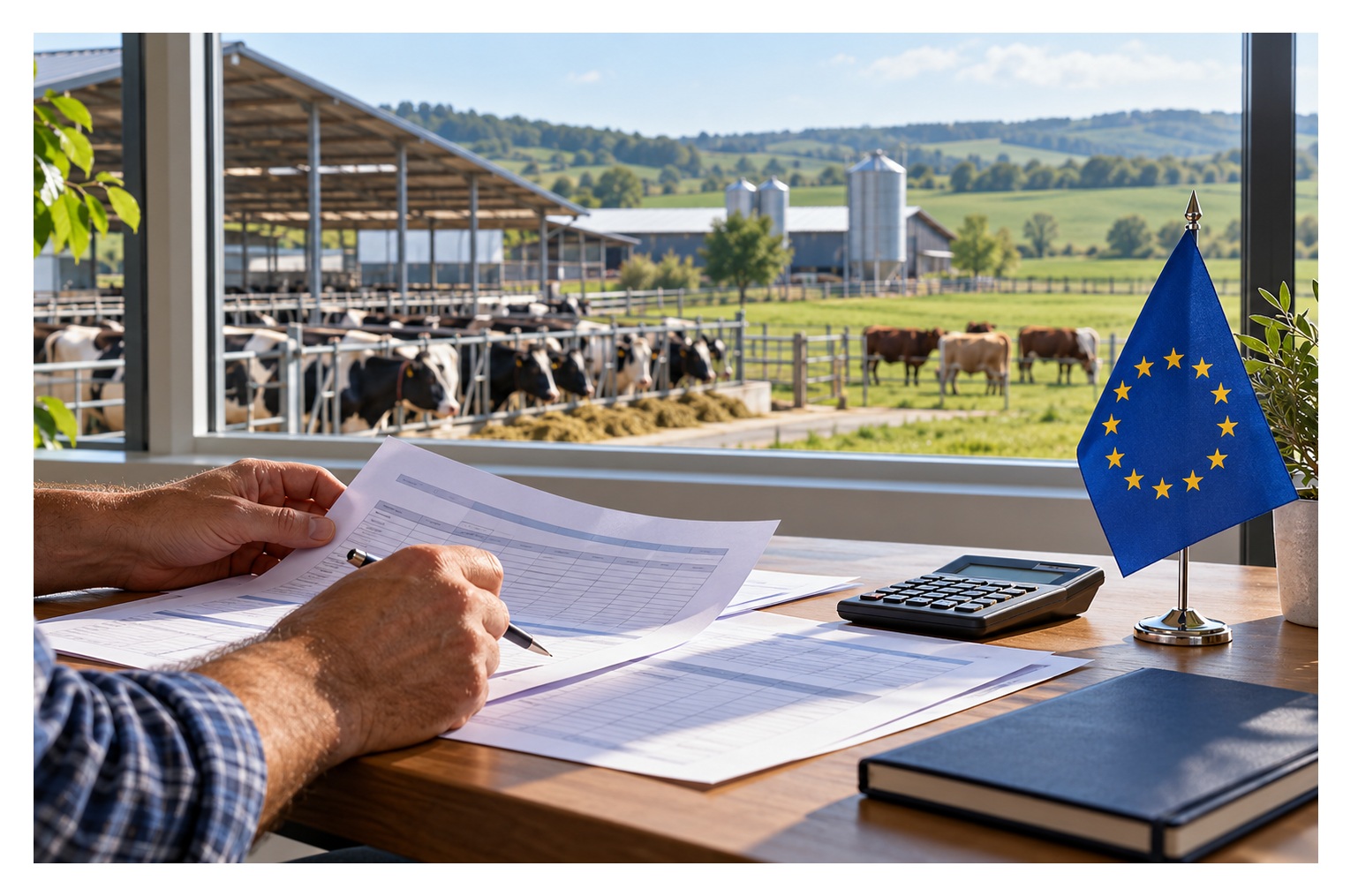
For livestock farms, predictable EU support matters when making investment decisions and planning future production. Negotiations on the next Common Agricultural Policy are progressing, but its budget remains unsettled. Copa-Cogeca warns that this uncertainty undermines farmers’ and agricultural cooperatives’ ability to plan ahead.
On 26 October 2026, the Council of the European Union approved a partial negotiating position on the framework for the Common Agricultural Policy beyond 2027. This agreement does not constitute the final adoption of the reform. It excludes financial and cross-cutting issues, which are being discussed as part of the negotiations on the EU’s 2028–2034 multiannual financial framework.
Technical Progress, Unresolved Financial Questions
In their press release issued on 27 October, Copa and Cogeca acknowledge improvements compared with the European Commission’s initial proposals. The organisations highlight the definitions of eligible hectares and active farmers, the differentiation of area-based income support, and provisions concerning retired farmers.
However, they raise concerns about requirements applicable to farms, checks, penalties, risk management, and the explicit recognition of agricultural cooperatives in investment support. In their view, simplification must deliver a genuine reduction in administrative complexity.
Their central demand is to preserve a truly common policy, backed by an adequate, dedicated budget that maintains its value in real terms by accounting for inflation.
Why It Matters for the Meat and Dairy Sectors
For livestock farming, funding prospects need to be considered alongside the timescales of investment. Modernising livestock housing, purchasing milking equipment, strengthening biosecurity and improving manure management all involve commitments extending beyond a single budget year.
The implications also extend to processors: planning industrial capacity requires an assessment of raw material availability and suppliers’ prospects. This is the economic relevance of the negotiations for the meat and dairy sectors, rather than an already quantified impact of the reform.
What Has Been Agreed and What Comes Next
The Council describes the future framework as simpler, more flexible and better targeted to farmers’ needs. Its position provides the basis for negotiations with the European Parliament, while the final financial allocation depends on an agreement on the overall multiannual budget.
For operators in Romania, the essential point is that neither the rules nor the funding arrangements are final. Both strands of the negotiations warrant close attention: eligibility conditions and available resources will determine, in practice, how farmers and other beneficiaries can make use of the future CAP.
Did you learn something new from this article?
Read also: