861

Author
Meat.Milk
Share on


Published on
2026 April 01
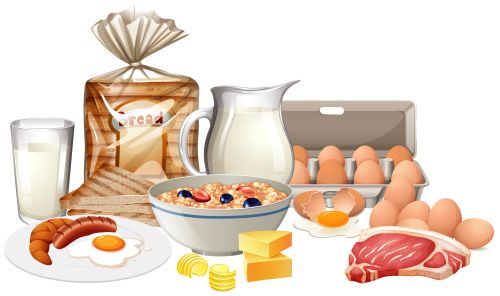
The Government of Romania has decided, within the governing coalition, to extend the measure capping commercial markups on basic food products for an additional three months, until June 30, 2026. The announcement was made by the Minister of Agriculture, Florin Barbu, who presented the decision as a continuation of the intervention aimed at limiting pressure on food prices and supporting consumers in a still volatile economic environment.
The mechanism targets the limitation of commercial markups across the entire distribution chain for essential products, including bread, milk, meat, eggs, oil, and sugar. According to data from the National Institute of Statistics, food prices have recorded significant increases over the past two years, with double-digit annual variations in certain categories, driven by high costs for energy, feed, and transportation. Authorities argue that the introduction of the cap has contributed to moderating these developments, particularly in retail, where price differences have been more visible to the end consumer.
At the European level, direct price interventions were used selectively by several Member States during the 2022–2024 period, in the context of the energy crisis and disruptions in supply chains. Romania is among the countries that have implemented such extensive measures in the food sector, aiming for a balance between consumer protection and maintaining market functionality. Officials from the Ministry of Agriculture emphasized that the measure remains temporary and will be reassessed depending on economic developments and its impact on industry operators.
For processors and retailers, the extension of the cap maintains pressure on commercial margins, in a context where production costs remain elevated. At the same time, authorities point to the need for continuous market monitoring to avoid supply imbalances or the transfer of costs to other segments. The evolution of this measure in the second half of 2026 will depend on the dynamics of food inflation and the stabilization of costs along the agri-food chain.
(Photo: Freepik)
Did you learn something new from this article?
Read also: