161

Author
Meat.Milk
Share on


Published on
2026 October 26
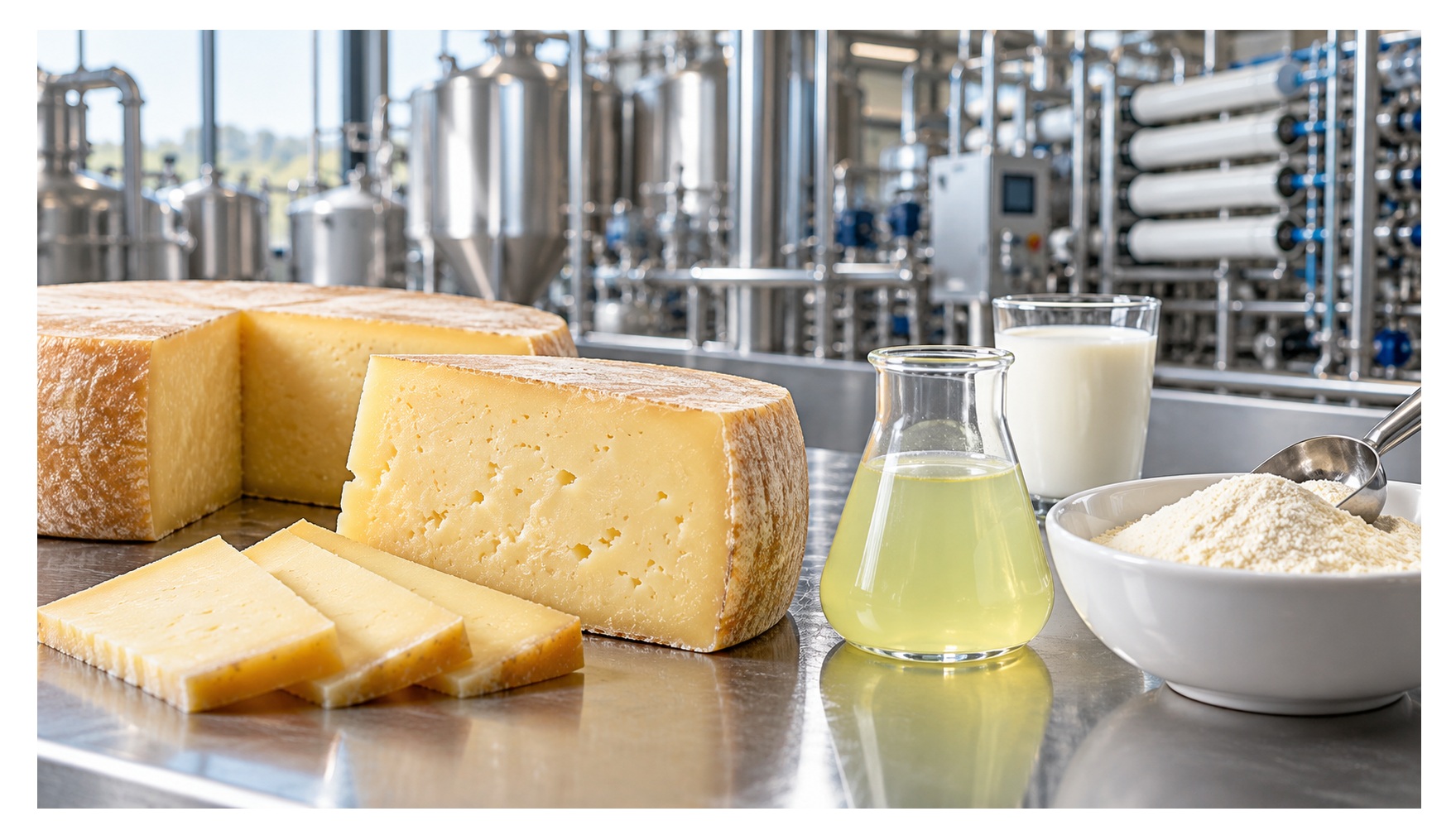
The value of milk also depends on how it is used. The European Commission’s autumn 2026 outlook highlights cheese, whey and demand for high-protein dairy products. For processors, the question is how to translate this demand into greater value from their raw material.
Cheese already plays a substantial role in Europe’s dairy industry. According to Eurostat’s published estimates for 2024, the European Union produced 10.8 million tonnes of cheese, using 59.9 million tonnes of whole milk and 17 million tonnes of skimmed milk. These figures cover cheese production as a whole and do not separately measure the segment marketed as high-protein products.
More milk makes processing choices more important
In its autumn 2026 outlook, the European Commission reports a 3.4% increase in milk supply in the first half of the year, compared with the corresponding period in 2025. For 2026 as a whole, it forecasts growth of 1.8%.
The Commission also expects cheese and whey to account for a larger share of the EU milk solids pool allocated to processing. Global demand for cheese and protein-enriched or high-protein dairy products is supporting European exports.
Whey: an opportunity that requires careful interpretation
For 2026, EU cheese exports could increase by 3%, while whey powder exports could remain close to their 2025 level. These are forecasts, rather than final full-year results. The Commission also expects drinking milk consumption to continue declining.
The distinction matters: interest in protein does not automatically translate into growth for every dairy product. Nor does stable whey powder export volume, on its own, demonstrate stagnation in export value or across the broader range of protein ingredients.
What processors need to calculate
From an economic perspective, these developments warrant a review of the product portfolio. When assessing an investment, the practical questions are which product the plant can sell, to what specifications, at what cost and to which buyers.
The assessment should include revenue from the resulting products, processing resource requirements, available capacity and the investment needed. The European report points to a market direction. The profitability of an individual plant must be established through its own calculations.
For Romanian processors, the opportunity therefore begins before a new “high-protein” label is introduced: with identifying the buyer and fully assessing the value that can be generated from milk.
Did you learn something new from this article?
Read also: