527

Author
Meat.Milk
Share on


Published on
2026 October 05
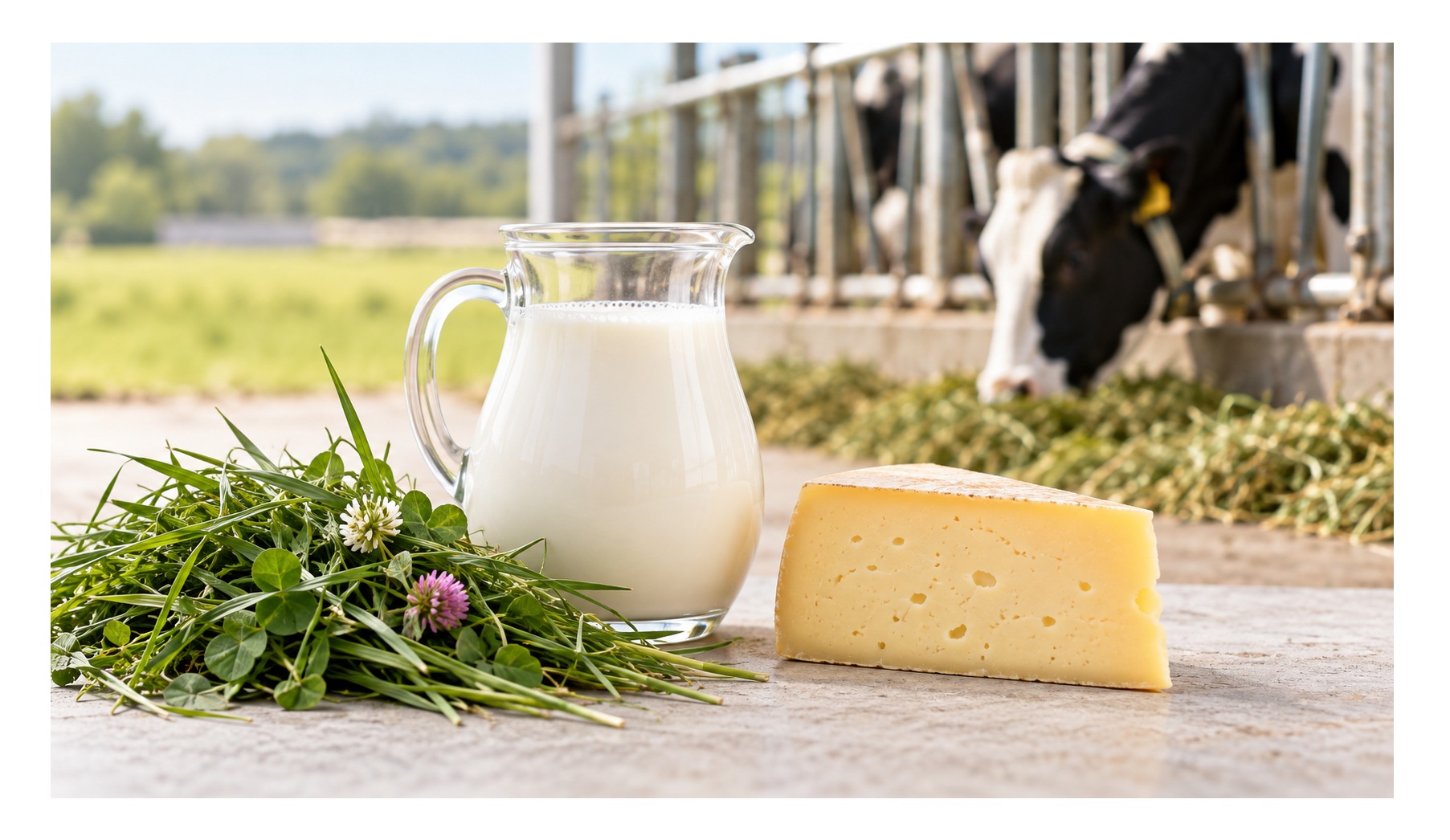
A change in the cows’ diet can have implications beyond daily milk production. The composition of the raw milk, the texture of the cheese and even its colour can reflect the feeding regime. For farmers and dairy technologists, this relationship is worth monitoring together: changes in the animals’ diet can become relevant at the processing plant.
A study published in the Journal of Dairy Science in 2016 compared milk from pasture-fed cows with milk from cows fed a total mixed ration based on silages and concentrates over an entire lactation. Under the experimental conditions, milk from the pasture-based systems had significantly higher concentrations of fat, protein and casein. The findings show that assessing a diet should also take milk components into account, rather than focusing solely on the volume delivered.
Casein and fat are directly relevant to cheesemaking, as they are the main components incorporated into the curd. However, changes in composition alone cannot predict all processing outcomes. Coagulation properties and cheese yield need to be assessed for the specific milk and process used.
The influence of feeding carries through to the finished product
In another experiment, published in the Journal of Dairy Science in 2017, researchers divided 54 cows into three groups: one fed a total mixed ration and two maintained on pasture, with or without white clover. The resulting Cheddar cheeses were monitored over a 270-day ripening period.
Cheeses made from the milk of pasture-fed cows had a yellower colour, associated with a higher beta-carotene content. They also had a different fatty acid profile and lower hardness at room temperature. The influence of feeding was therefore reflected in measurable characteristics of the cheese.
The effects are not, however, the same for every change. A study published in the International Dairy Journal in 2025 compared multispecies pastures with perennial ryegrass pastures. The researchers found no significant differences in rennet coagulation properties, although milk from the multispecies system had a higher protein content and achieved a higher actual Cheddar cheese yield.
For collaboration between farmers and dairy technologists, these findings suggest a practical approach: significant changes in feeding should be communicated to the processor and monitored through comparative analyses and cheesemaking trials. Linking the diet to milk protein and fat levels, coagulation properties and cheese yield can help explain variations between batches. Farm-level decisions can thus also be assessed in terms of their effects on the finished product.
(Photo: AI GENERATED)
Did you learn something new from this article?
Read also: