899

Author
Meat.Milk
Share on


Published on
2026 February 25
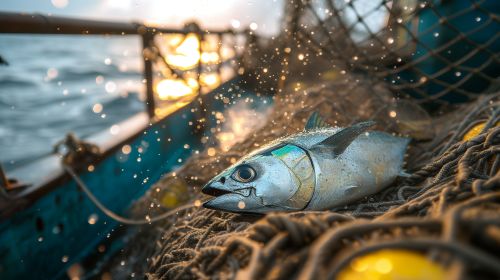
Romania’s fisheries and aquaculture sector remains a marginal segment within the structure of agri-food production, yet with strategic relevance in the context of food security and European policies on the sustainable use of aquatic resources. According to data published by Eurostat, Romania’s total fisheries and aquaculture production stands below 20,000 tonnes annually, representing less than 1% of total European Union production.
The structure of domestic production is dominated by aquaculture, particularly carp farming and other freshwater species, carried out mainly in extensive or semi-intensive systems. According to FAO, Romania has over 80,000 hectares of fish farming facilities, but the level of economic utilization is variable, influenced by feed, energy, and labor costs. Marine fishing, concentrated in the Black Sea area, makes a limited contribution to total volume, mainly due to constrained resources and quotas established under the European Union’s Common Fisheries Policy.
From a foreign trade perspective, the trade deficit in fishery products is persistent. Aggregated data from UN Comtrade show that the value of imports significantly exceeds exports, reflecting a high dependence on external markets. At the same time, domestic fish processing remains limited, concentrated in small and medium-sized units with relatively low added value.
(Photo: Freepik)
Did you learn something new from this article?
Read also: