1054

Author
Meat.Milk
Share on


Published on
2025 November 19
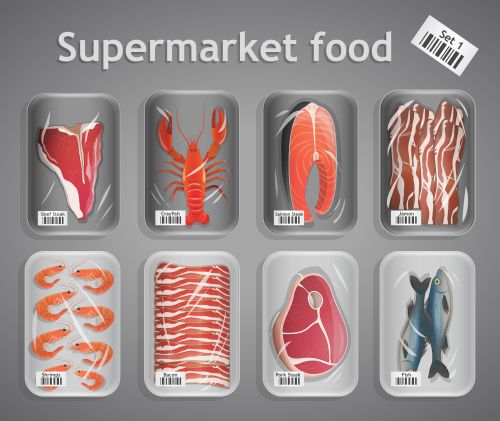
The European Union is strengthening the framework for origin labeling for fresh and processed meat, in the context of growing consumer demand for transparency. According to the European Commission, consumer information regulations require clear indication of the country of rearing, slaughter, and processing of animals, and discussions are underway to extend these requirements after 2025 to more categories of meat products, including complex-recipe preparations.
Eurostat data (2025) show that over 70% of European consumers state that origin influences their purchasing decisions, particularly for beef and pork. This behavior is driven by interest in safety, traceability, and production standards. As a result, pressure on economic operators is increasing, since retail chains are requesting more detailed information and robust verification systems.
For processors, the new requirements involve investments in digital traceability systems, adapted labeling, and data collection across the entire production flow. According to OECD analyses, implementing integrated traceability reduces non-compliance risks and optimizes batch management, but entails compliance costs estimated at 2–4% of annual operational expenses. At the same time, EFSA emphasizes that accurate labeling helps reduce risks related to non-compliant mixtures and increases trust in the food chain.
In Romania, operators in the meat industry are gradually aligning with these standards through digitalization of production flows and the adoption of internal audit systems for raw material origin. The Ministry of Agriculture and Rural Development (MADR) and the National Sanitary Veterinary and Food Safety Authority (ANSVSA) focus on coordinated controls that verify both the correctness of labeling information and the actual traceability of batches. For large producers, compliance provides a competitive advantage, as modern retail favors suppliers with full traceability and verifiable information.
Origin labeling thus becomes a defining criterion for the competitiveness of the meat industry in Europe. In a context where purchasing decisions are increasingly sensitive to information, European origin standards represent not only an obligation but also an opportunity to differentiate Romanian products on a demanding, transparency-oriented market.
(Photo: Freepik)
Did you learn something new from this article?
Read also: