777

Author
Meat.Milk
Share on


Published on
2026 April 03

The food industry is entering a phase in which competitive advantage is no longer defined exclusively by cost or capacity, but by the speed and quality of decision-making. In an environment characterized by high demand volatility and constant pressure on margins, the difference between companies lies in their ability to transform data into action, in real time.
The shortening of product life cycles is a relevant indicator. In certain food categories within European retail, over 20–25% of the portfolio is replaced annually, while new products are evaluated within the first 8–12 weeks after launch. If they fail to meet established rotation thresholds, they are delisted and shelf space is reallocated. This dynamic forces processors to make rapid decisions regarding reformulation, repositioning, or product withdrawal.
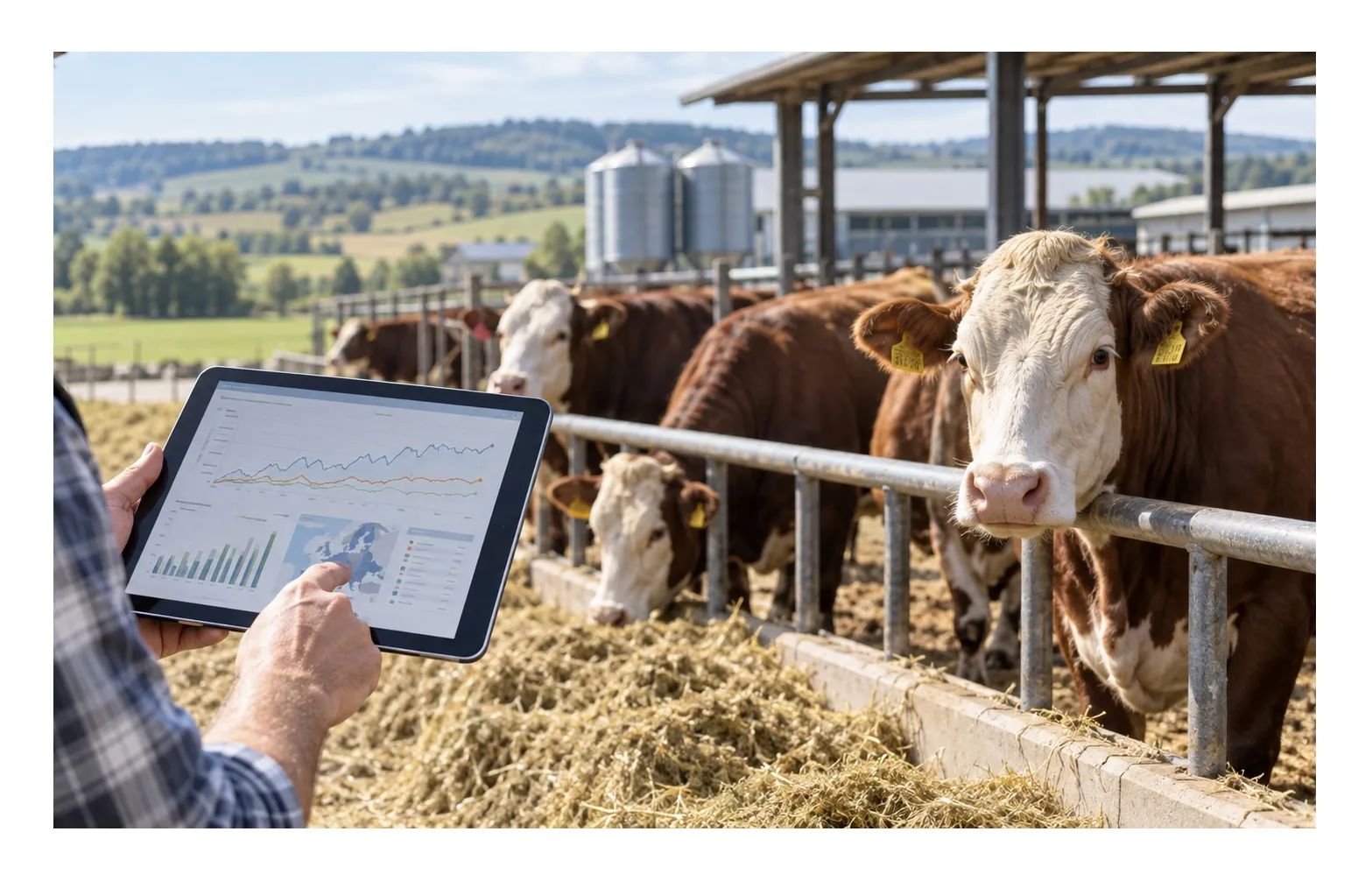
Operational digitalization becomes essential in this context. Companies that use integrated planning and data analytics systems can reduce operational costs by 10–20% and optimize inventory by up to 15%, according to industry analyses. Real-time monitoring of sales and consumer behavior enables rapid adjustments in production and distribution.
At the same time, cost pressures remain high. In recent years, energy and logistics costs have recorded double-digit increases during certain periods, while the volatility of raw material prices continues to affect planning stability. In this context, delayed decisions translate directly into financial losses.
For companies in Romania, the gap is not only technological, but also organizational. Fragmented decision-making processes and the lack of data integration limit responsiveness. By contrast, operators that adopt digital models and integrated processes reduce their exposure to risk and increase flexibility.
For 2026, speed becomes a factor of production. Companies that can rapidly assess product performance, adjust their portfolio, and respond to market changes will have a clear advantage. In an industry where margins are limited, the difference between profit and loss is measured in reaction time.
Data control is no longer a support tool, but a condition for competitiveness. Those who decide faster and more informed can maintain their position; those who delay lose access to the market.
(Photo: Freepik)
Did you learn something new from this article?
Read also: