672

Author
Meat.Milk
Share on


Published on
2026 April 24
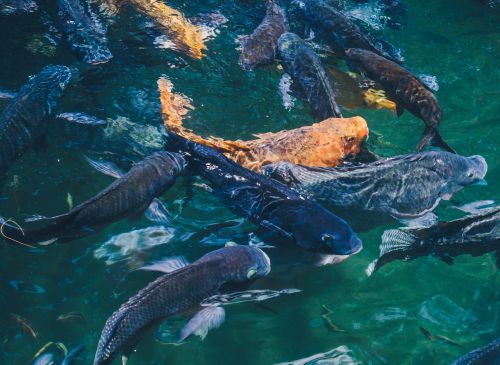
Romania’s fish farming industry is at a crossroads. Amid growing competition from Nordic producers and increasingly severe climate-related challenges, the country’s aquaculture farms are beginning to look at Industry 4.0 solutions as an essential tool for survival and growth.
Domestic producers are competing with those from Northern European countries under difficult conditions — the price of Romanian fish is almost double that of imported fish. This reality is pressuring farmers to find solutions to reduce costs and increase efficiency without compromising product quality.
Sensors, data and smart decisions
Digital transformation has already entered some fish farms in Romania. By implementing IoT and cloud platforms, farms with dozens of fish ponds have installed sensors that transmit real-time data on dissolved oxygen, water temperature, turbidity and pH — essential parameters for maintaining fish stock health.
The results are tangible. Moving from decisions based on direct observation to decisions supported by data analysis has led to greater visibility over day-to-day operations and the identification of new business development opportunities.
European funding for modernization
The European context is favorable for this transition. Romania’s Aquaculture and Fisheries Programme (PAP) 2021–2027 allocates total funding of more than €232 million, of which the EU contribution exceeds €162 million. The priority with the highest allocation — more than €108 million — specifically targets the promotion of sustainable aquaculture activities, as well as the processing and marketing of fishery products.
These funds create real opportunities for farmers looking to modernize infrastructure, adopt recirculating systems or integrate real-time monitoring technologies.
Untapped potential, but growing
Romania benefits from a rich hydrographic network and a long-standing tradition in fish farming. Commercial fishing remains an activity with deep-rooted tradition and significant social and economic importance in the Black Sea coastal area, along the Danube and the Danube Delta, as well as on the Prut, Siret and Olt rivers. Unlocking this potential through modern tools represents the natural direction for the sector’s development.
Digitalization does not mean replacing farmers, but equipping them with the tools needed to make better decisions, faster. Romania’s fish farming sector has the potential to become competitive at European level — provided it embraces change.
(Photo: Freepik)
Did you learn something new from this article?
Read also: