868

Author
Meat.Milk
Share on


Published on
2026 April 28
Romania’s cattle sector is currently facing a tension that is not new, but is becoming increasingly difficult to ignore: livestock numbers have been eroding over the long term, milk collection continues to show significant fluctuations, and the gap compared to the European average remains structural.
Beyond the numbers, the picture reveals a sector that has the resources to perform, but lacks the infrastructure and organization needed to do so consistently.
A shrinking herd, with early signs of stabilization
From 2006 to 2024, Romania lost more than 38% of its cattle herd.
This is not just an abstract statistic — it means that nearly four decades of livestock accumulation have been eroded in less than twenty years.
As of December 1, 2024, the total herd stood at 1.809 million head.
There is, however, a positive signal: as of June 1, 2025, Romania recorded 1.84 million cattle, up 0.7% compared to the same date of the previous year, while the breeding herd increased by 1.7%, meaning more than 20,000 additional head.
It is too early to call it a recovery, but the direction has changed.
At the European level, Romania ranks 10th in total cattle numbers, but falls to 21st in livestock density per 100 hectares of agricultural land — an indicator that says a great deal about farm organization and productivity per unit of land.
Milk: high production on paper, weak valorization in practice
The most painful gap can be seen in milk production per animal.
A cow in Romania produces on average approximately 4,800 kg of milk per year, compared to the EU average of 7,300 kg — a difference of more than 50%, which cannot be explained by genetics alone, but also by feeding practices, management, and farm infrastructure.
The average price of raw milk paid to Romanian farmers also remains below the European average: approximately EUR 39.6/100 kg, compared to EUR 43.2/100 kg at EU level.
Industrial milk collection shows a positive short-term trend: in October 2024, the quantity of cow’s milk collected by processing units increased by 5.5% compared to October 2023.
The issue is not production itself, but the degree to which it is integrated into the industrial supply chain.
Romania imports approximately 25% of its domestic dairy consumption, despite having the livestock and natural conditions needed to cover its own demand.
Fragmentation — the structural cause behind all gaps
Out of approximately 500,000 dairy farms in Romania, 98% are small farms with fewer than 10 head of cattle.
This is, ultimately, the root cause of most problems.
Small farms mean limited access to high-performance genetics, specialized consulting, modern equipment, and bargaining power in relationships with processors.
On a farm with five to eight cows, even the best genetics in the world cannot generate sustainable profitability without proper housing, optimized feeding, and professional management.
The consolidation trend does exist, but it remains slow.
Regions with larger and better-organized farms — particularly Central Romania and the North-West — were also the regions that recorded herd growth in 2025, while regions dominated by subsistence farming continue to lose livestock.
What comes next
Signals from the first half of 2025 suggest that herd erosion has stopped — at least temporarily.
It remains to be seen whether this stabilization is supported by real investments in genetics, infrastructure, and professional training, or whether it is simply a pause within a long-term downward trend.
The answer will depend largely on the decisions being made today on farms: which bulls are used, what data collection systems are adopted, and what relationships are built with processors.
These may seem like technical details, but when accumulated across the entire sector, they will define the future of Romanian livestock farming over the next decade.
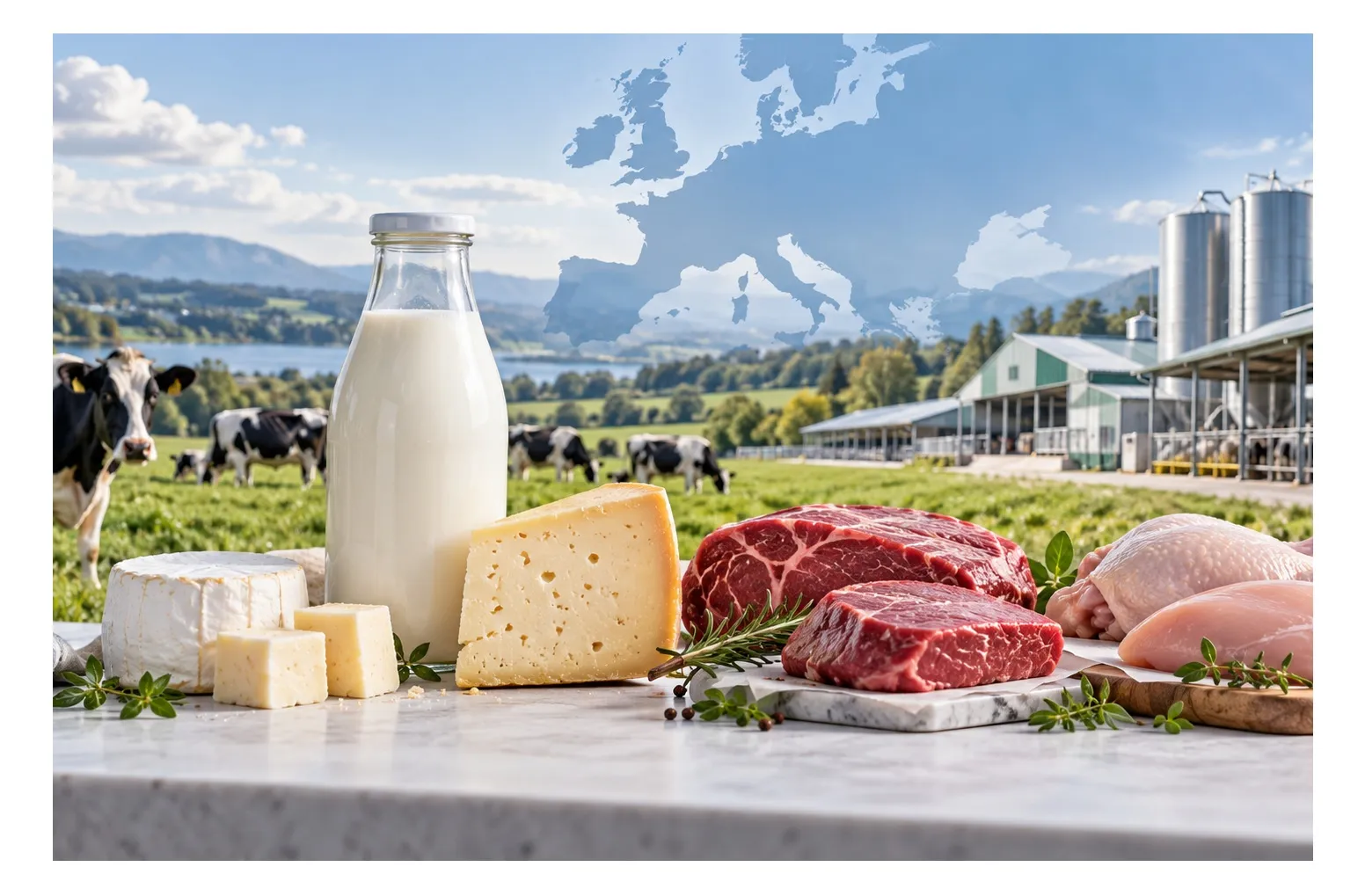
(Photo: AI GENERATED)
Did you learn something new from this article?
Read also: