1015

Author
Meat.Milk
Share on


Published on
2026 February 20
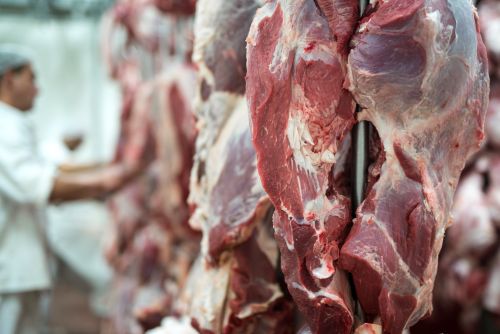
In 2026, Romania’s meat sector is facing a structural tension: modern slaughtering capacities coexist with an insufficient livestock base, especially in the pork segment. The issue is not only cost, but the actual utilization rate of existing investments.
Slaughtering is an activity with a predominantly fixed cost structure. Expenses related to skilled labor, energy, sanitary-veterinary compliance, and equipment depreciation are independent of volume up to a certain threshold. In practice, profitability becomes stable only above a utilization rate of approximately 75–80% of technical capacity. Below 60%, the unit cost rises rapidly and margins are compressed.
Data published by Eurostat show that Romania remains a net importer of pork, with a consistent trade deficit in recent years, indicating a structural dependence on external raw materials. At the same time, domestic pig herds have declined significantly compared to the pre-2018 period, according to European agricultural statistics. This combination—installed capacity and insufficient raw material—leads to underutilization.
At European level, European Commission reports show that countries with a high degree of farm–processing integration manage to stabilize animal flows and maintain slaughterhouses at an optimal level of operation. By contrast, in fragmented markets, volume fluctuations lead to strong variations in cost per kilogram.
For 2026, the implication is structural: the problem is not the existence of capacities, but their consistent supply. Without rebuilding the domestic livestock base and without supply chain integration, the industry remains dependent on imports to sustain the investments made. The difference between competitiveness and vulnerability is not determined by the size of the slaughterhouse, but by its utilization rate.
(Photo: Freepik)
Did you learn something new from this article?
Read also: