645

Author
Meat.Milk
Share on


Published on
2026 April 22
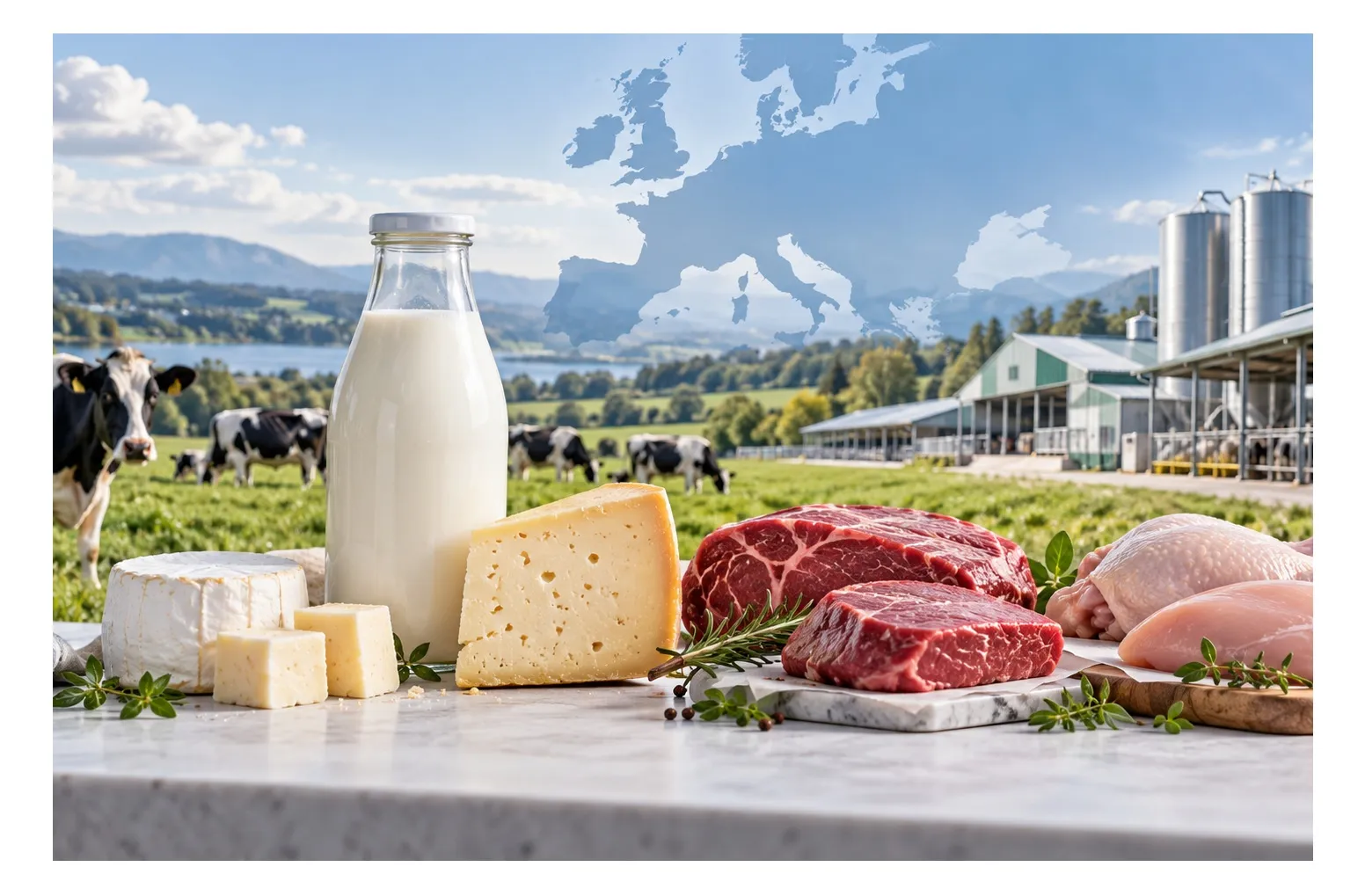
The Ministry of Agriculture and Rural Development (MADR) hosted an international delegation made up of experts, professors, and PhD students from Bulgaria and Turkey as part of an academic mobility program carried out through Erasmus+. The event is part of the project “SustainLife: Sustainable Agrifood Chains in the Digital Era,” coordinated by the Economics II Doctoral School within the Bucharest University of Economic Studies, and reflects the intensification of regional cooperation in the field of sustainable agriculture and digitalization.
The discussions focused on three main directions: integrating digital technologies into agrifood supply chains, analyzing the structural challenges of Romania’s agrifood sector, and strengthening connections between academia and decision-makers. Digitalization remains a key element in the European strategy for agriculture, supported by European Commission initiatives related to precision farming, product traceability, and reducing environmental impact. In this context, the exchange of best practices between universities and public institutions contributes to accelerating the transfer of applied knowledge.
The participation of approximately 40 representatives from Sofia University and Sivas Cumhuriyet University highlights regional interest in developing common models for adapting to the requirements of the European Green Deal and the new Common Agricultural Policy (CAP 2023–2027). Through MADR, Romania is strengthening its role as an active partner in academic and institutional dialogue at a time when pressures related to sustainability, production costs, and competitiveness are increasing.
From an institutional perspective, MADR’s openness toward such initiatives indicates a focus on integrating academic expertise into the decision-making process. According to data from the European Commission and Eurostat, digitalization and innovation are key factors in increasing productivity and reducing gaps between member states in the agrifood sector. In Romania, these processes are still being consolidated, particularly in terms of technology adoption at farm and processing levels.
Direct interaction between research and public administration can contribute to shaping a new generation of specialists capable of managing the transition toward a more efficient and resilient agrifood system. In this context, such meetings go beyond their protocol dimension and become functional instruments for adapting agricultural policies to European and global dynamics.
(Photo: Freepik)
Did you learn something new from this article?
Read also: