782

Author
Meat.Milk
Share on


Published on
2026 March 16
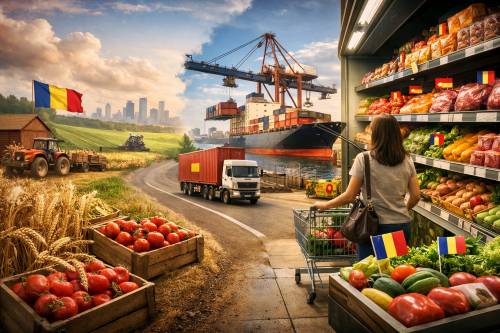
Recent statements by the Minister of Agriculture, Florin Barbu, have brought back into focus one of the structural problems of Romania’s agri-food sector: the significant gap between the price paid to farmers and the price paid by consumers in supermarkets, as well as the role of intermediaries in the access of Romanian products to retail shelves.
The minister publicly stated that some Romanian farmers end up marketing their production through companies registered in other jurisdictions, including Cyprus, in order to gain access to retail chains in Romania. In this context, he requested that the Competition Council analyze the commercial mechanisms that influence the access of local producers to the supermarket market.
According to the data presented by the minister, live pigs are sold at the farm gate for around 4.3 lei/kg, while in retail pork can reach 20–28 lei/kg. The difference reflects the costs of processing, logistics, transport, storage, and distribution, as well as the commercial margins added at each stage of the food chain. However, the discrepancy raises questions regarding the balance between the economic actors involved.
The situation arises in a difficult context for Romania’s pork sector. According to Eurostat, Romania’s pork production was approximately 263,000 tonnes in 2023, a decline compared with previous years, mainly due to the impact of African swine fever and the restructuring of the sector. At the same time, domestic consumption significantly exceeds national production.
Several market analyses indicate that Romania covers a large share of its pork demand through imports, with some estimates placing imports at over 70–80% of total consumption. Products originating from major producing countries such as Spain or Germany frequently reach supermarket shelves, increasing competition for local producers.
The Minister of Agriculture also drew attention to the way in which some products are marketed under brands created by intermediaries, even though they originate from Romanian producers. Under these circumstances, companies with significant production capacity may end up depending on intermediaries for access to retail.
The discussion regarding the functioning of the food supply chain is relevant for the entire agri-food sector. In the absence of strong chain-integration mechanisms—such as cooperatives, direct contracts with retailers, or investments in processing and distribution—farmers remain vulnerable to market fluctuations and to the dominant position of large buyers.
The investigation requested from the Competition Council could provide clarifications regarding the structure of commercial relationships within the market. For Romanian agriculture, the outcome is important not only from a competition perspective, but also in terms of the sector’s capacity to maintain domestic production within a European market characterized by high product mobility and intense competition.
(Photo: AI GENERATED)
Did you learn something new from this article?
Read also: