891

Author
Meat.Milk
Share on


Published on
2026 February 23
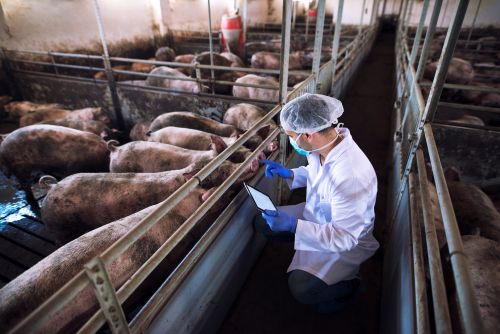
In 2026, the rebuilding of pig herds in Romania represents one of the most sensitive economic decisions in the livestock sector. After the severe contraction recorded between 2018 and 2023, mainly driven by the impact of African swine fever, the sector stands at an inflection point between recovery and stagnation.
Eurostat data indicate that the national pig herd remains significantly below pre-2018 levels, while Romania continues to be a net importer of pork. The trade deficit in this category has remained high in recent years, confirming that a substantial share of domestic demand is covered by imports.
The economic mechanism is clear. Rebuilding herds requires substantial investment in housing, biosecurity, and working capital, in a context where feed costs—strongly influenced by cereal price dynamics—remain decisive for the final production cost. At the same time, volatility in European pork prices exposes farmers to additional risks.
In Member States with a high level of farm-to-processing integration, European Commission reports point to more efficient stabilization of animal flows and a reduction in commercial risk. In Romania, the fragmentation of the sector amplifies investment vulnerability.
For 2026, the decision to rebuild herds is not a short-term one, but a strategic choice. Economic sustainability depends on supply-chain integration, veterinary and sanitary stability, and access to predictable financing. In the absence of these conditions, dependence on imports remains a structural reality of the meat market.
(Photo: Freepik)
Did you learn something new from this article?
Read also: