1060

Author
Meat.Milk
Share on


Published on
2026 April 28
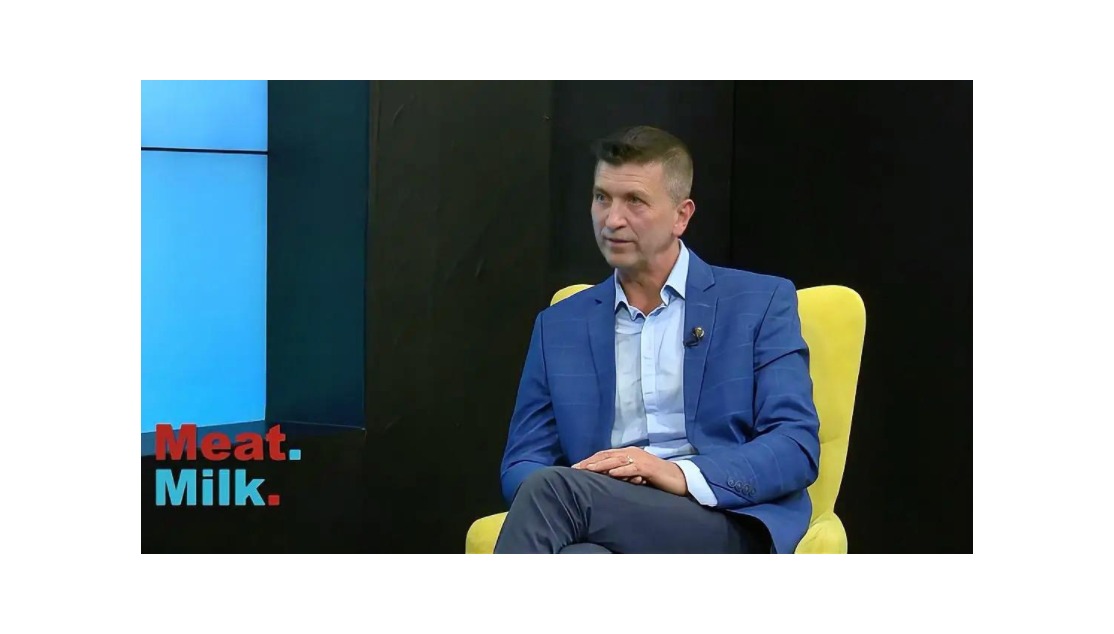
The recent edition of the Meat.Milk. program brought into focus an essential yet insufficiently visible segment of livestock farming: cattle reproduction and genetic improvement. The guest, Valer Sician, General Manager of Semtest BVN Mureș, operates in a field where decisions do not generate immediate effects, but they determine the long-term performance of farms by transmitting productive traits from one generation to the next.
With academic training in animal science and veterinary medicine, as well as professional experience in Switzerland and Germany, Valer Sician has been leading one of Romania’s longest-standing and most resilient animal reproduction companies for more than a decade.
Founded in 1963 as a state-owned enterprise, Semtest BVN Mureș survived the critical post-revolution period — during which five out of the country’s seven Semtest entities went bankrupt — and has consolidated its position as the national leader in the sector.
Today, the company employs more than 30 specialists, including 15 professionals with higher education degrees, all working exclusively in reproduction.
He highlighted the structural differences between Western systems and the Romanian model, particularly in terms of professional training and applied research.
While in Western countries knowledge transfer is supported through institutionalized advisory networks and strong integration between farms, universities, and research institutions, in Romania this mechanism remains fragmented.
According to European Commission data, more than 90% of farmers do not benefit from complete formal agricultural training, leading to increased dependence on empirical learning and significant variability in farm performance.
In this context, the role of companies such as Semtest BVN Mureș becomes increasingly relevant not only through the production of genetic material, but also through their contribution to knowledge transfer and the standardization of reproduction practices.
Their activity includes bull selection and testing, the use of genomic evaluation, on-farm consultancy, and customized mating plans adapted to the specific conditions of each farm, with the goal of aligning genetics with real production environments.
Choosing a bull is not an isolated decision, but rather the result of an analysis that correlates the farmer’s objectives, production levels, housing conditions, and animal resilience.
Semtest is currently the number one company in Romania in terms of the number of male cattle it owns, as well as the volume and quality of semen marketed, with access to European and global-level genetics.
The discussion also highlighted existing gaps in capitalization and infrastructure.
Although access to high-value genetics is comparable to that in other EU member states, the differences emerge in farms’ ability to integrate these resources.
Without investments in housing facilities, equipment, and management systems, genetic potential cannot be fully utilized.
As a result, competitiveness is no longer determined exclusively by natural resources, but by how efficiently those resources are organized and managed.
A distinctive element of Semtest’s activity is the Bull Parade, an event that has reached its 23rd edition, organized annually in Sângeorgiu de Mureș, and which serves as a practical validation tool for genetics.
Farmers have the opportunity to correlate catalog data with direct animal evaluation, reducing uncertainty in selection decisions and accelerating the adoption of high-performing genetic lines.
The event brings together participants from more than 25 counties every year and includes a scientific symposium dedicated to cattle genetics and reproduction, attended by representatives of state institutions, researchers, and academia.
In a sector marked by cost pressures and market volatility, genetics is becoming one of the few tools capable of generating sustainable competitive advantages.
From this perspective, reproduction is no longer just a technical link in the chain — it has become a strategic element, and the decisions made in this area directly define the future of farms.
Did you learn something new from this article?
Read also: