205

Author
Meat.Milk
Share on


Published on
2026 November 04
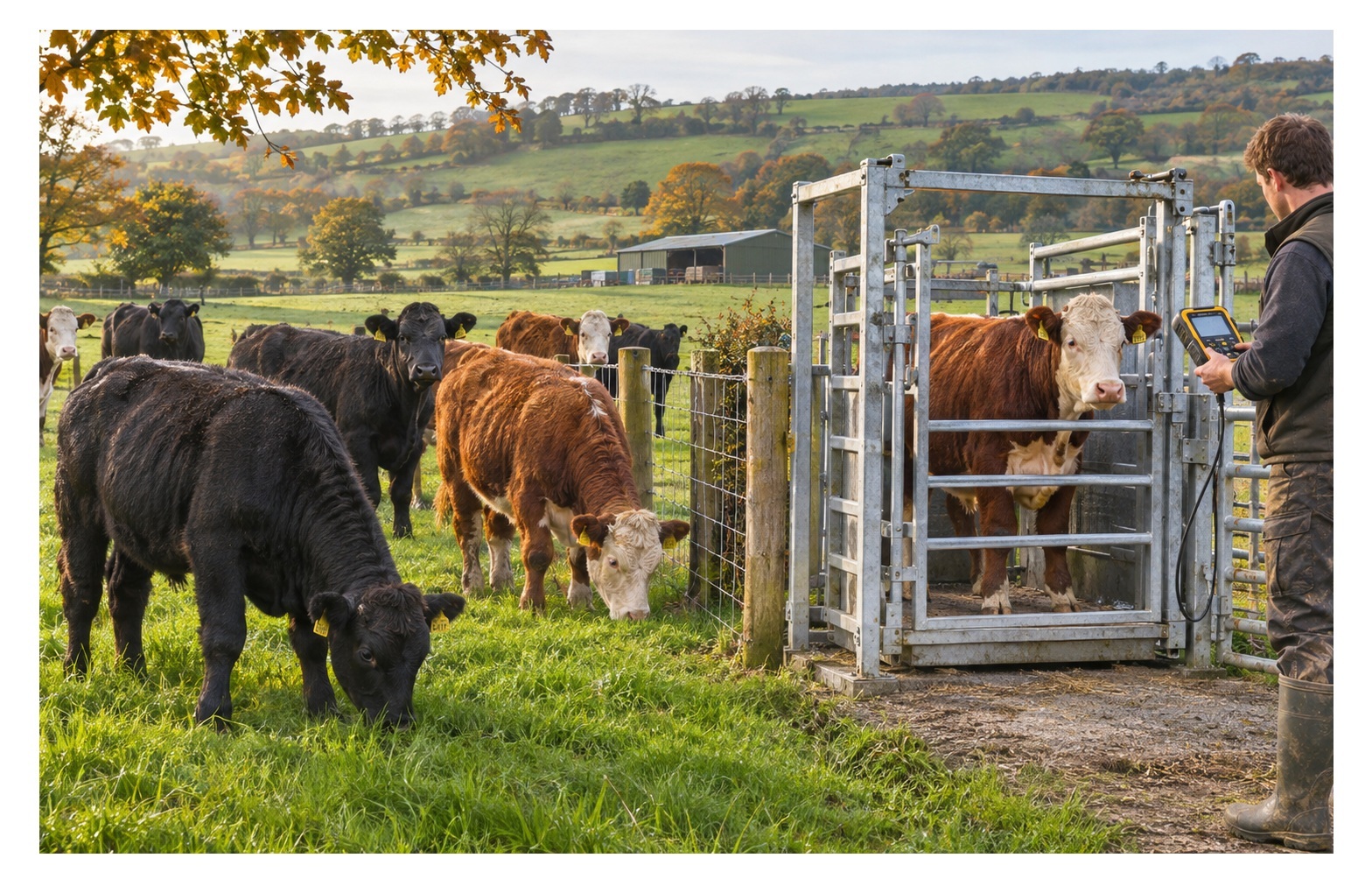
The age at which cattle are ready for slaughter is determined long before the finishing stage. A case study published by Teagasc on 1 November 2026 shows how calf selection, weaning and grazing management are organised around a common objective: cattle ready for slaughter at around 21 months of age.
The Beirne family, from Elphin in County Roscommon, Ireland, farms 80 hectares, of which almost 39 are dedicated to a calf-to-beef system. More than 100 early-maturing Angus and Hereford steers and heifers are reared and finished on this land.
The calves are sourced from just three farms and arrive at approximately three weeks of age. By weaning, they are generally consuming more than 2 kg of concentrates per day and weigh approximately 90 kg liveweight. These are features of the system described, rather than universal thresholds for every farm.
The target age must be considered alongside carcass weight
For 2024/25, Teagasc reports that the steers were slaughtered at an average age of 20.8 months, with an average carcass weight of 261 kg. The heifers averaged 21.2 months and 259 kg per carcass.
The farm aims to avoid carrying cattle through a second winter wherever possible. Paddock grazing and improvements to the sward help maintain consistent growth.
What can be learned from this example
For a Romanian farm, the practical lesson is to establish a measurable pathway from purchase to slaughter. The target age must be aligned with the animals’ genetics, the farm’s feed resources and the buyer’s requirements.
Successive weighings can show whether the group remains on track. The economic assessment should consider separately the additional cost of keeping the animals and the value of the extra weight that could be gained by extending the production cycle.
The case study does not demonstrate that 21 months is the optimum age for every farm. It does, however, illustrate the value of a system in which purchasing, nutrition and land use all serve the same objective.
The meaningful outcome is a carcass that meets market requirements, produced within a timeframe and at a cost the farm can sustain. The Irish example provides a benchmark; the finishing decision must be justified by the performance of the farm’s own group of cattle.