1892

Author
Meat.Milk
Share on


Published on
2026 January 20

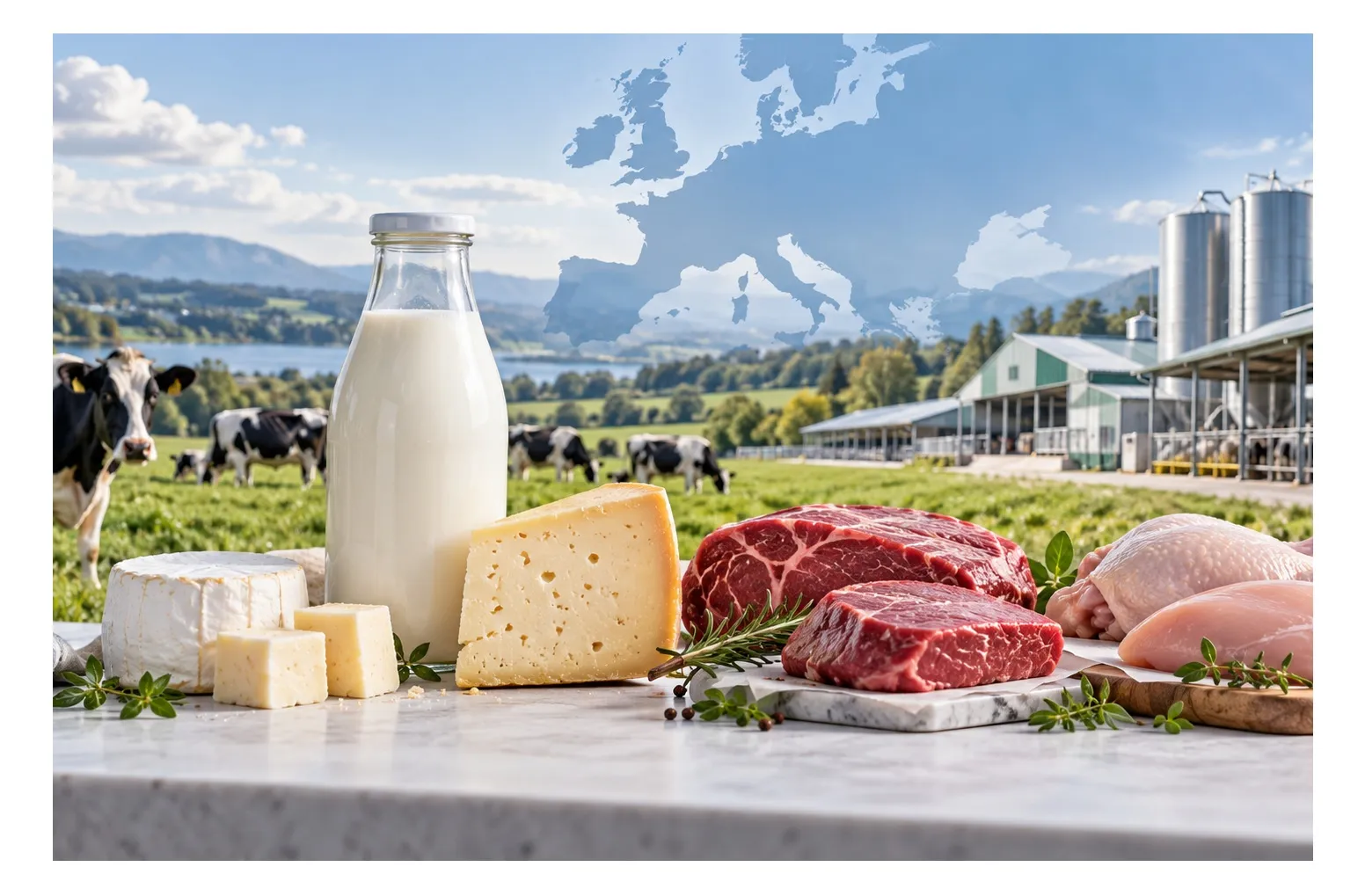
The European Union and the Mercosur states (Argentina, Brazil, Paraguay, and Uruguay) signed on 17 January 2026, in Asunción (Paraguay), the package of agreements that formally concludes negotiations launched in 1999 and politically finalized in December 2024. The documents have been received differently across Europe, including against the backdrop of public pressure generated by farmers’ protests in several Member States, which point to risks of unfair competition and additional compliance costs.
From a legal perspective, the package is structured into two parallel and distinct instruments: the EU–Mercosur Partnership Agreement (EMPA), built on three pillars—political dialogue, cooperation, and trade—and the Interim Trade Agreement (iTA), which includes trade and investment commitments and is designed for accelerated application, ahead of the entry into force of the EMPA. This separation reflects the need to advance the trade component within a shorter institutional timetable, without blocking the broader partnership framework.
Based on aggregated 2024 data, the agreement targets a combined market of over 700 million consumers and would form one of the largest free trade areas in the world. The EU is Mercosur’s second-largest trading partner in goods, accounting for nearly 17% of the South American bloc’s total trade. In the same year, EU–Mercosur trade exceeded €111 billion, with €55.2 billion in EU exports and approximately €56 billion in imports.
Signature does not equate to full application. Ratification procedures will follow in the European Parliament and in the relevant jurisdictions, in line with institutional competences, while the iTA is envisaged for application prior to the entry into force of the EMPA. For Romania, the next stage involves assessing sectoral impacts—particularly in livestock farming and processing—and calibrating public policies in relation to EU standards and pressure on farm-gate prices.
(Photo: Freepik)
Did you learn something new from this article?
Read also: