922

Author
Meat.Milk
Share on


Published on
2026 February 13
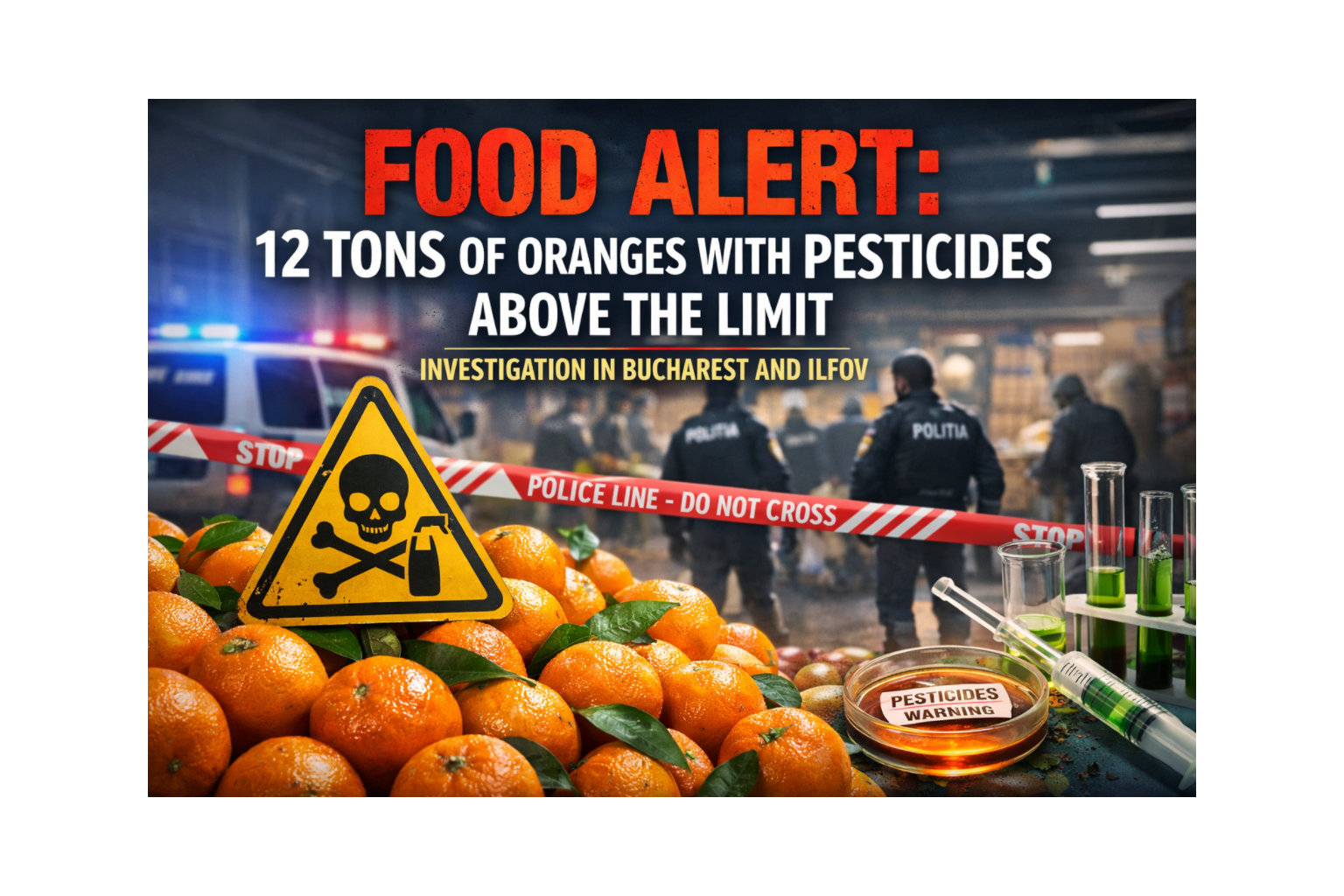
Authorities have launched a criminal investigation after approximately 12.4 tons of imported oranges were allegedly marketed in retail networks in Romania with exceedances of the maximum permitted levels for pesticide residues. According to publicly communicated information, the fruit originated from Egypt and was reportedly mislabeled with a different country of origin, raising concerns regarding product traceability and compliance.
The case is being handled by the Romanian Police, through its economic crime investigation units, under the supervision of the competent Prosecutor’s Office. Searches were carried out in Bucharest and in Ilfov and Ialomița counties, and several individuals are to be questioned. The investigation concerns possible offenses of tax evasion, document forgery, and the marketing of non-compliant food products.
In the European Union, maximum permitted levels for pesticide residues are established through EU legislation and monitored through annual control programs. Notifications regarding non-compliant products are managed through the Rapid Alert System for Food and Feed (RASFF), a mechanism coordinated by the European Commission that allows for the rapid withdrawal of products posing a health risk.
In Romania, official controls regarding food safety are carried out by the National Sanitary Veterinary and Food Safety Authority and by the competent phytosanitary structures. Products that exceed legal limits must be withdrawn from sale, and economic operators may be subject to administrative or criminal penalties, depending on the severity of the violations.
Until the official laboratory analysis results are published, the active substances identified and the exact level of exceedance have not been publicly disclosed. The investigation is ongoing, and the authorities are expected to determine legal responsibilities and any additional measures regarding the withdrawal of the batches from the market.
(Photo: AI GENERATED)
Did you learn something new from this article?
Read also: