1630

Author
Meat.Milk
Share on


Published on
2025 December 10
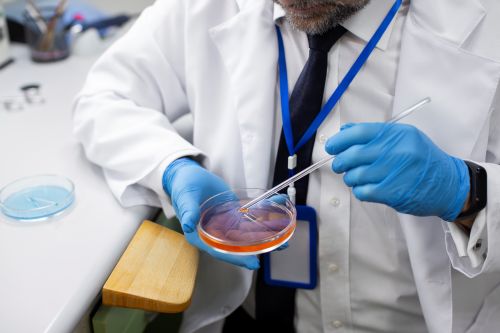
In 2025, microbiological auditing is becoming one of the main verification tools used by European authorities to assess the compliance of meat industry establishments. EFSA indicates in the latest “EU One Health Zoonoses Report” that Salmonella and Campylobacter remain the dominant pathogens in the meat chain, with prevalence levels varying between Member States. These data have led DG SANTE to intensify controls regarding the implementation of the microbiological criteria set out in Regulation (EC) No 2073/2005.
The new European guidelines for 2024–2025 require slaughterhouses and cutting plants to adapt their sampling procedures to address a more complex risk profile. DG SANTE emphasizes the frequency of testing and the use of methods validated at the European level, including rapid detection techniques. Establishments must demonstrate sample traceability, measurement accuracy, and the way results are integrated into the HACCP analysis.
Eurostat highlights that these requirements come at a time when operational costs are increasing considerably. The industry must manage financial pressure generated by energy consumption, labor, and investments in monitoring equipment. For many establishments, upgrading internal laboratories or outsourcing testing is becoming an inevitable step to maintain compliance.
A central element of the audit is the evaluation of temperature control. Deviations reported by DG SANTE indicate issues related to manual monitoring, the lack of redundancy sensors, and fluctuations in cutting and storage areas. In 2025, the Commission recommends the adoption of integrated digital systems capable of providing real-time alerts on variations and automatically generating compliance reports.
EFSA also stresses the importance of verifying hygiene procedures. Data collected across the EU show that a significant share of contaminations is due to non-compliance with cleaning protocols or insufficient validation processes. To meet the new requirements, establishments must integrate surface testing, periodic internal audits, and systems for objective assessment of cleaning efficiency.
For operators in Romania, implementing the new European standards represents an opportunity to increase competitiveness but also a strategic obligation. Establishments that adopt modern microbiological control systems are better positioned for access to the European market and for reducing operational risks.
(Photo: Freepik)
Did you learn something new from this article?
Read also: