903

Author
Meat.Milk
Share on


Published on
2026 February 12
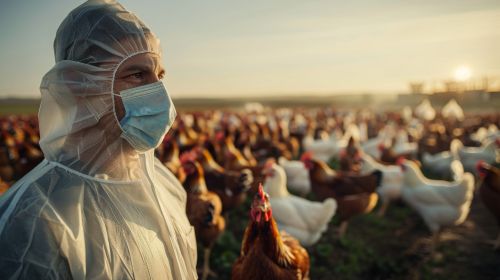
The global poultry industry is entering 2026 on a favorable growth trend, in an economic and geopolitical context more stable than in previous years, yet marked by increased market volatility. This outlook is highlighted by the latest Rabobank analyses, which track the structural developments of the poultry sector worldwide and its positioning relative to other animal proteins.
According to Rabobank estimates, global poultry production is expected to grow by approximately 2–2.5% in 2026, continuing a multi-year trend of steady expansion. The pace is slightly more moderate than in the post-pandemic period, but still higher than that recorded for beef or pork. The main competitive advantage of the poultry sector lies in its high feed conversion efficiency, relatively controllable production costs, and broad cultural acceptance worldwide.
Demand is driven primarily by emerging markets in Asia, Africa, and Latin America, where population growth and rising disposable incomes support the consumption of affordable animal protein. In developed economies, poultry benefits from its perception as a healthier product and its adaptability to convenient consumption formats, including processed and ready-to-cook products. In this context, chicken continues to strengthen its position compared with other types of meat, which are more sensitive to price fluctuations and environmental constraints.
However, the report also highlights an increase in the volatility of the poultry market. Feed costs remain exposed to fluctuations in grain markets, while sanitary risks—particularly recurring outbreaks of avian influenza—can generate rapid disruptions in production and international trade. These are compounded by geopolitical and trade uncertainties that influence export flows and the food security strategies adopted by many countries.
In this context, the economic performance of the poultry sector in 2026 will depend less on volume growth and more on operational discipline, cost control, and the ability to adapt to external shocks. Poultry farming remains one of the most resilient branches of global livestock production, but it is entering a phase in which risk management becomes a key determinant of medium-term competitiveness.
(Photo: Freepik)
Did you learn something new from this article?
Read also: