698

Author
Meat.Milk
Share on


Published on
2026 May 05
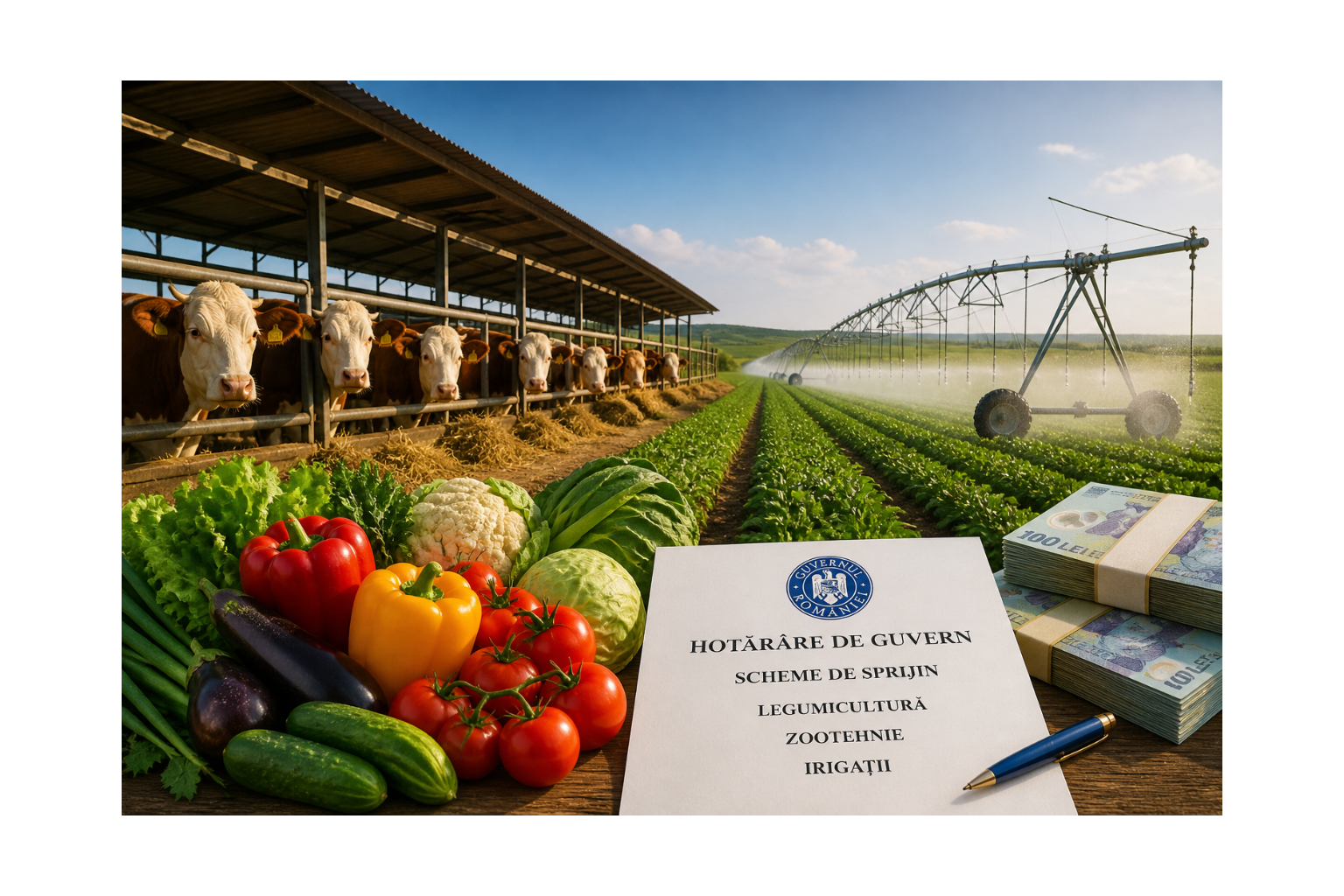
The Government of Romania has adopted a package of normative acts aimed at financing key segments of agriculture, with a focus on vegetable production in protected spaces, the livestock sector, and support for irrigation. The measures include direct funding allocations and the extension of certain compensation schemes, in a context marked by pressure on production costs and the need to increase economic efficiency at farm level.
According to officially communicated data, support for vegetable growers in greenhouses and solariums amounts to 275 million lei for the current year. This intervention aims to maintain domestic production and reduce dependence on imports, given that, according to Eurostat data, Romania remains a net importer of fresh vegetables during the off-season. At the same time, the livestock sector benefits from an allocation of 137 million lei, mainly directed towards supporting genetic improvement activities.
Data from the FAO and the European Commission indicate that genetic performance directly influences productivity and unit costs, making it an essential factor for competitiveness. The support granted to breeding associations aims to strengthen this component, with a medium-term impact on farm yields.
A relevant element of the package is the extension of the electricity cost reimbursement scheme for irrigation until May 2026. The state will cover up to 50% of eligible costs, a measure with direct impact on farmers in drought-prone areas. According to the Ministry of Agriculture and INS data, the effectively irrigated area in Romania remains below the potential of the existing infrastructure, while energy costs represent one of the main obstacles to the use of irrigation systems.
From an economic perspective, these measures indicate a direction towards stabilizing domestic production and supporting sectors with a strategic role in food security. However, medium-term efficiency depends on aligning these interventions with investments in infrastructure, processing, and the organization of producers.
(Photo: AI GENERATED)
Did you learn something new from this article?
Read also: