993

Author
Meat.Milk
Share on


Published on
2026 February 02
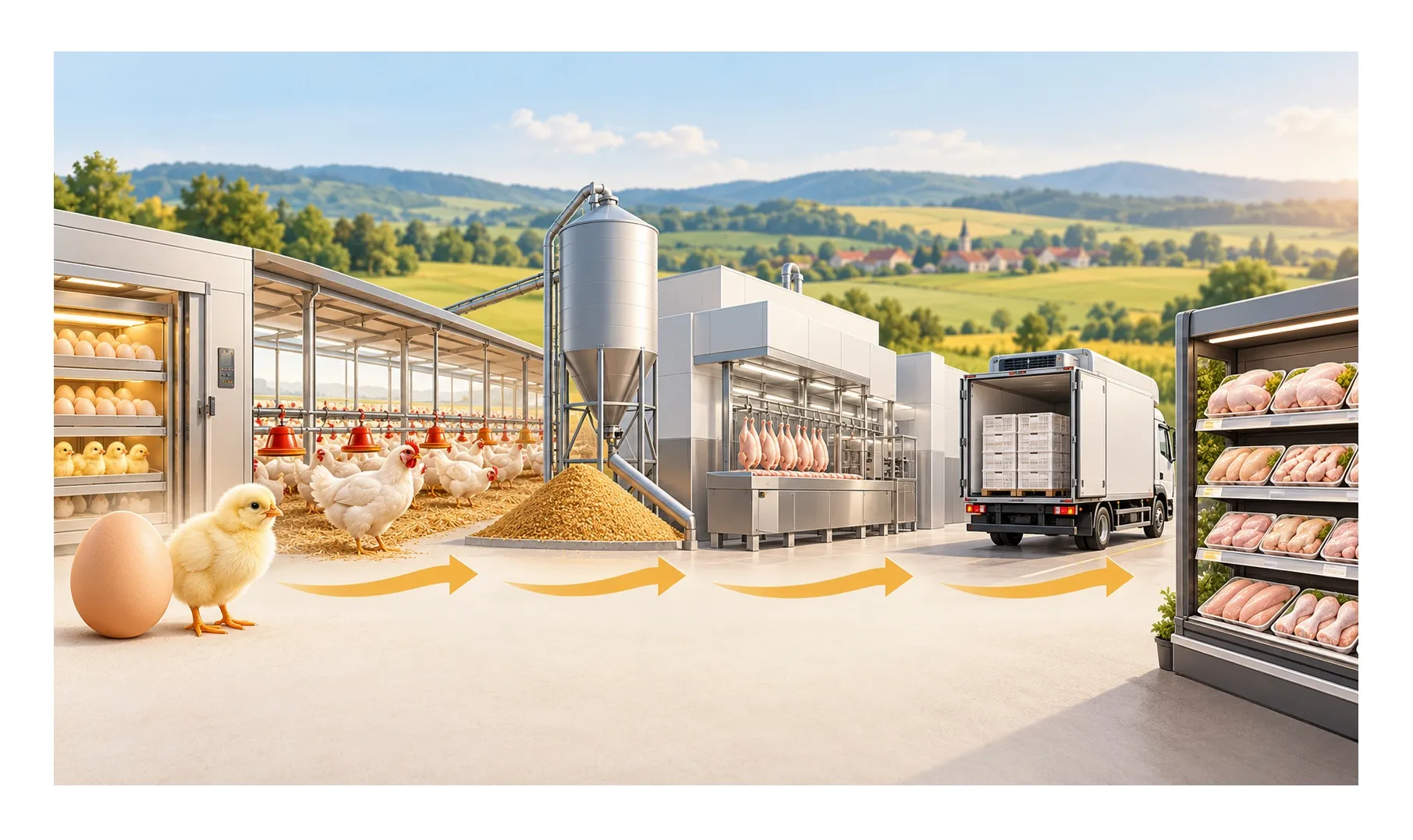
In 2026, integration between farming and processing is no longer a strategic option, but a condition for economic stability in the meat sector. Fragmentation of the value chain remains the main source of cost volatility and loss of added value.
The mechanism is both economic and operational. When primary production and processing are separated, price, volume, and delivery risks are transferred between chain segments without being effectively controlled. Integration enables production planning, stabilization of livestock flows, and the spreading of fixed costs across the entire value chain.
Eurostat data show that European Union member states with a high level of integration in the meat sector experience lower price volatility at farm gate level and more efficient utilization of processing capacity. According to FAO, integration reduces unit costs and increases the ability to absorb market shocks. For 2026, European scenarios point to a widening gap between integrated and fragmented supply chains.
The implication is structural: without genuine integration between farming and processing, margins remain exposed regardless of demand dynamics.
(Photo: Freepik)
Did you learn something new from this article?
Read also: