761

Author
Meat.Milk
Share on


Published on
2026 February 05
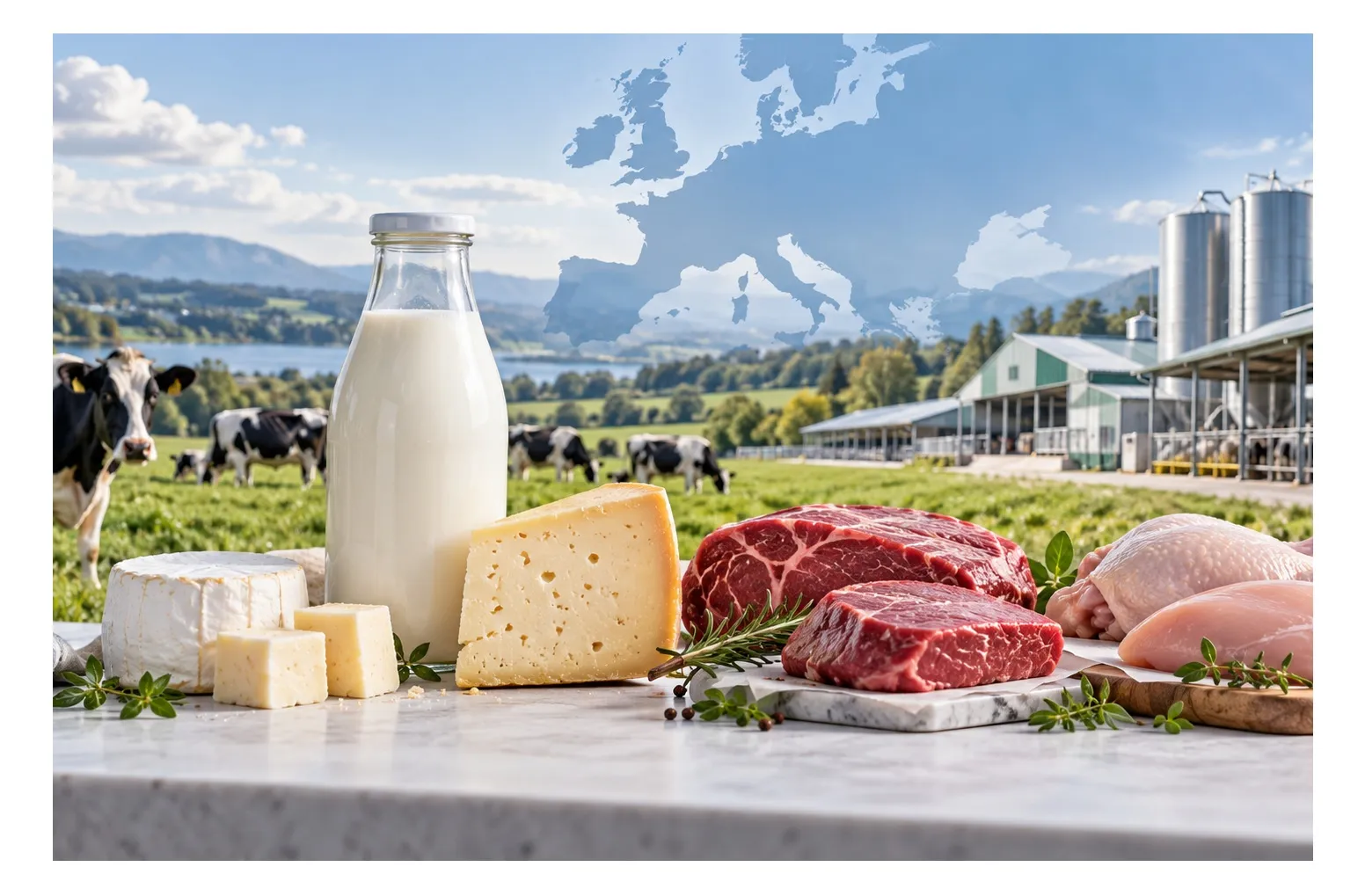
The President of the Chamber of Commerce and Industry of Romania, Mihai Daraban, publicly stated that Romania acted correctly in voting for the trade agreement between the European Union and Mercosur, rejecting concerns about a major negative impact on agriculture. Invited to a political analysis program, he argued that public perception distorts the real role of agriculture within the agreement and within the structure of the European economy.
According to Daraban, industry generates approximately 30% of Romania’s GDP, while agriculture contributes only 4.5%. At the level of the European Union, agriculture and livestock account for around 1.5% of the economy. In this context, the EU–Mercosur agreement cannot be interpreted as an agricultural treaty, as the agri-food sector represents at most 30% of the total trade provisions.
One of the main arguments invoked concerned the volumes of meat exempted from customs duties. The quota for beef is approximately 99,000 tonnes, equivalent to about 1.5% of the European Union’s annual production, while for poultry it is approximately 180,000 tonnes, or around 1.3%. From this perspective, Daraban assessed that the risk of destabilizing the European market is limited.
The CCIR President also criticized the extremely fragmented structure of Romanian agriculture. According to the data presented, more than 578,000 farms are under 5 hectares, while large holdings are very few in number. In his view, this reality limits productivity and the ability to ensure consistent supply to large cities.
Regarding subsidies, Daraban proposed that financial support be concentrated on farms larger than 100 hectares in order to stimulate economic efficiency. In the livestock sector, he signaled the existence of fraudulent practices related to the artificial maintenance of animals for the purpose of obtaining subsidies and suggested directing support toward final processors, provided that they use domestic production.
His message highlights an economic vision focused on competitiveness, trade integration, and the profound restructuring of the agricultural sector. In this approach, the EU–Mercosur agreement is seen as an opportunity for industry and exports, while Romanian agriculture is called upon to adapt to increasingly demanding economic realities.
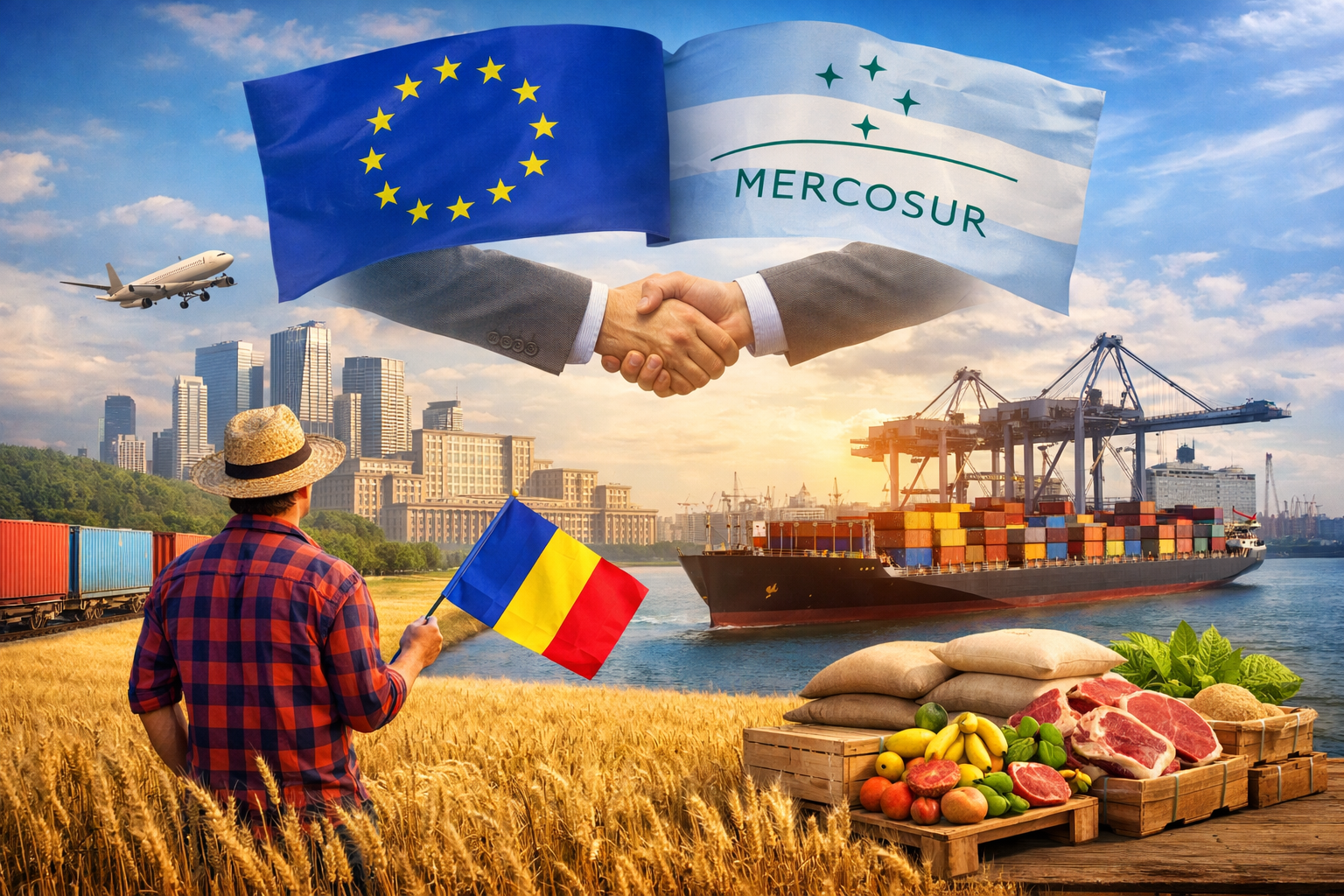
(Photo: AI GENERATED)
Did you learn something new from this article?
Read also: