959

Author
Meat.Milk
Share on


Published on
2025 December 18

The European Parliament has adopted a firm position on the future trade agreement between the **European Union and the Mercosur countries—Argentina, Brazil, Paraguay, and Uruguay—**calling for stronger safeguards to protect European farmers. This decision comes amid the European Commission’s intention to move forward in the coming period with the signing of the agreement, before all protection mechanisms for sensitive agricultural sectors have been fully finalized.
The Parliament’s position предусматриes the establishment of a special safeguard mechanism, designed to allow rapid intervention when imports of agricultural products from Mercosur countries risk disrupting the EU internal market. The emphasis is placed on strengthening import controls and ensuring fair treatment for European producers, given the differing production standards between the EU and its partner countries.
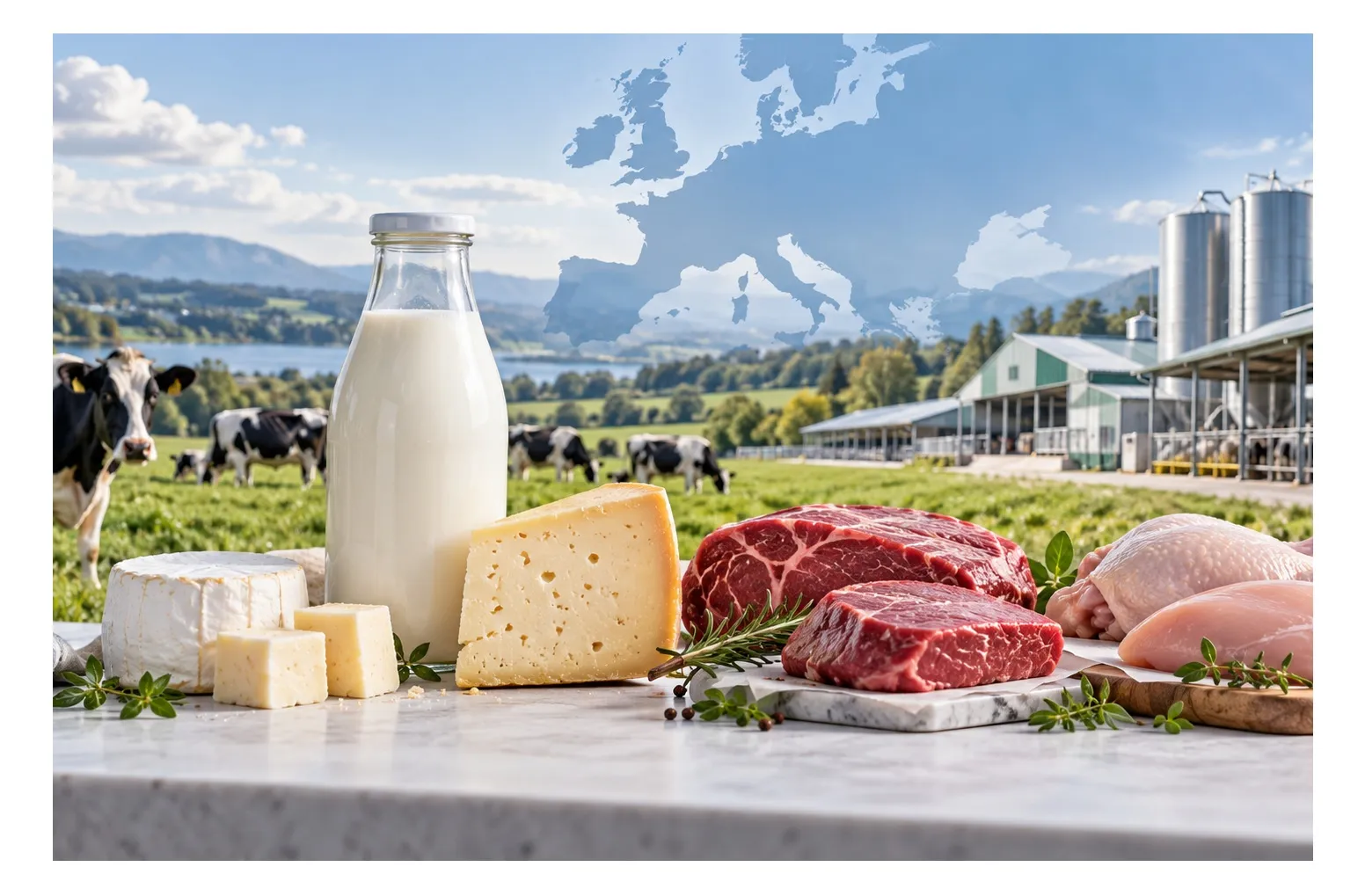
For Romanian agriculture, this approach is of direct relevance. Sectors explicitly targeted include beef, poultry meat, sugar, cereals, honey, and fruit, all of which could face increased pressure if imports grow at prices lower than those prevailing on the European market.
The European Parliament has supported lowering the thresholds required to activate the safeguard clause. Under the proposed approach, the European Commission would be required to launch an investigation when imports of a sensitive agricultural product increase by 5% as a three-year average, compared to the initially proposed threshold of 10% per year. Intervention would also be possible if the import price falls by more than 5% and is at least 5% below the EU internal average price.
The duration of investigations would be shortened, from six to three months as a general rule, and from four to two months for sensitive products. In addition, the list of the 23 products subject to enhanced monitoring could be expanded at the request of affected sectors, while the timeframe for triggering the emergency brake mechanism would be reduced from 21 to 14 days.
A key element of the Parliament’s position is the possibility of applying safeguard measures also in cases where imported products do not comply with environmental or sanitary standards equivalent to those imposed on producers within the European Union.
Following the adoption of this position, interinstitutional negotiations between the Parliament, the Council, and the Commission will take place, with the aim of reaching an agreement before the signing of the EU–Mercosur agreement.
(Photo: Freepik)
Did you learn something new from this article?
Read also: