696

Author
Meat.Milk
Share on


Published on
2026 April 27
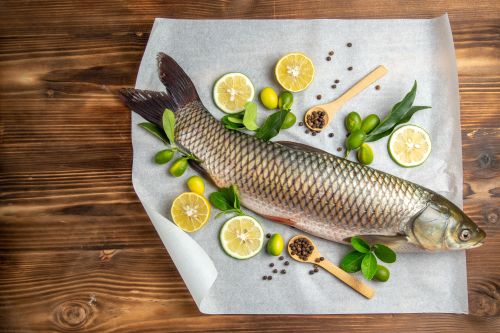
Of all fish species farmed in Romania, trout best illustrates the structural gap between potential and reality. Domestic demand exceeds local production, the country’s mountain waters provide an exceptional natural environment, and investor interest is growing — yet the sector remains significantly underdeveloped.
A market with a chronic deficit
The available data is clear: domestic trout production stands at around 2,000 tonnes annually, while consumption exceeds 4,500 tonnes per year. The gap is covered almost entirely through imports, mainly from Norway, Poland, and Turkey — countries with well-capitalized industrial farms and lower production costs.
Across the entire fisheries sector, Romania produces approximately 30,000 tonnes of freshwater fish annually in fish farms, with trout and carp representing the main species. The total turnover of the fisheries sector amounts to approximately €30–40 million, a modest level compared to the country’s actual potential.
Mountain waters, farms with major ambitions
Romania has one of the most favorable natural environments in Europe for trout farming. The cold, oxygen-rich mountain rivers of the Carpathians — in the Mureș, Olt, Argeș, and Bistrița river basins — are ideal for traditional trout farms.
One of the most interesting recent projects has emerged here: the “Păstrăvul din Țara Ta” agricultural cooperative, which launched a fish farm on Lake Oașa, at an altitude of 1,400 meters in the Șureanu Mountains.
In 2023, the farm produced 100 tonnes; in 2024, production increased to 360 tonnes, and the target for 2025 is 500 tonnes annually.
The cooperative has signed a partnership with Carrefour Romania for the commercialization of its production and plans to expand with additional farms on Vidra Lake and Poiana Ruscă, as well as a processing facility in Sebeș — all financed through European funds.
Another active producer is Euro Păstrăv, which operates the Răstolița trout farm in Mureș County and produces approximately 75 tonnes of rainbow trout annually, marketed both domestically and internationally.
Import pressure and rising costs
Romanian trout farmers face the same structural pressures as the rest of the fisheries sector. Production costs have increased by more than 20% over the past two years, driven by higher feed and energy prices.
Imports of farmed trout from the European Union are placing significant pressure on domestic prices, reducing the competitiveness of local farms.
At the same time, only 9% of fish farms benefited from European funding between 2021 and 2024, indicating weak absorption of available financial support.
A sector with real potential — if investments materialize
The Oașa cooperative model shows that viable solutions exist: European financing, partnerships with retail chains, natural-environment farming, and export-oriented development.
Romania’s Aquaculture and Fisheries Programme 2021–2027 makes more than €232 million available to the country, with priority given to production and processing modernization.
If these funds are accessed efficiently, Romanian trout has all the prerequisites to reduce import dependency and become a stronger presence both on the domestic market and across Europe.
(Photo: Freepik)
Did you learn something new from this article?
Read also: