1001

Author
Meat.Milk
Share on


Published on
2026 February 02
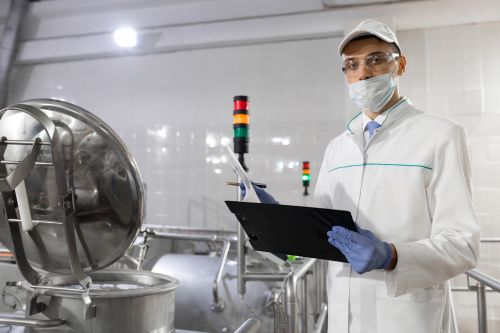
In 2026, the shortage of skilled labor remains one of the most sensitive vulnerabilities of the European food industry. Beyond the numerical lack of employees, the real issue is the skills gap between current technological requirements and the qualification level of the available workforce. The European Commission and the OECD indicate that the food industry is among the sectors facing the highest pressure for professional adaptation, particularly in processing, quality control, and technical maintenance.
Accelerated automation and digitalization have reshaped job profiles within factories. Operating modern production lines, monitoring critical parameters, interpreting data, and responding rapidly to deviations require technical skills that can no longer be acquired solely through informal, on-the-job experience. In 2026, the lack of continuous training is identified as one of the main causes of recurring non-compliances and operational losses.
European data show that facilities investing consistently in workforce training record a significant reduction in quality incidents and unplanned downtime. Professionalization is not measured only through isolated training courses, but through employees’ ability to understand processes and intervene preventively. In this context, vocational training becomes a risk management tool rather than merely an administrative obligation.
European policies for the 2026–2030 period encourage the integration of vocational training into industrial strategies, including through partnerships between industry, public authorities, and educational institutions. The focus is placed on applied skills tailored to factory realities and on the continuous updating of knowledge in areas such as food safety, energy efficiency, and process digitalization.
For Romania’s food industry, workforce professionalization represents an essential condition for competitiveness. The ability to retain skilled personnel and develop internal competencies will directly influence compliance with European standards, operational efficiency, and the sector’s attractiveness to investors. In 2026, human capital is consolidating as one of the most important strategic resources of the food industry.
(Photo: Freepik)
Did you learn something new from this article?
Read also: