2111

Author
Meat.Milk
Share on


Published on
2025 November 24

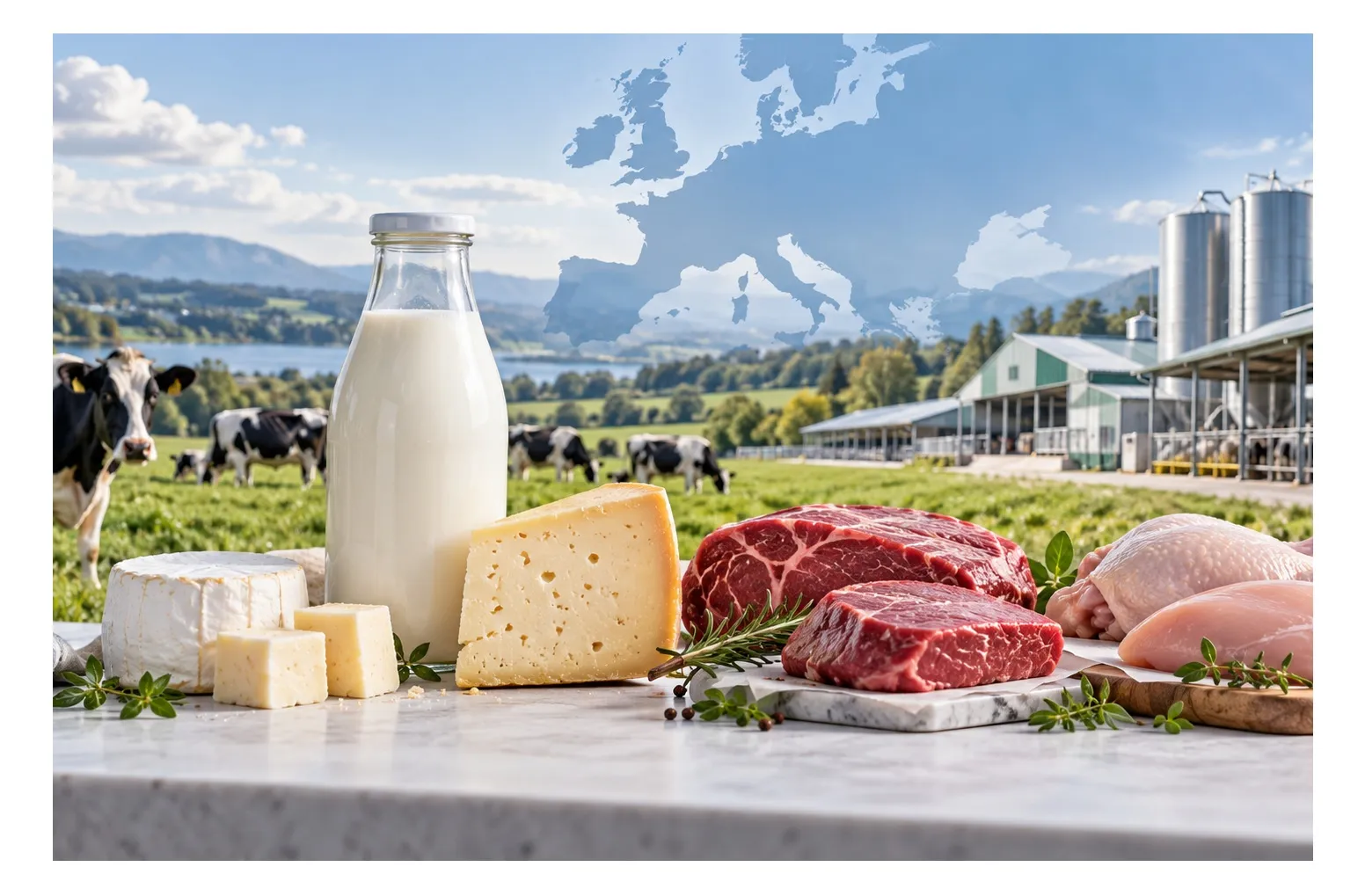
Food security remains a strategic objective within the European Union, and the public policies adopted after 2020 have begun to produce measurable effects. In its reports on the resilience of the food chain, the European Commission notes that access to safe, diverse and affordable food depends on stable production, well-functioning markets and the capacity of Member States to respond to external shocks. An OECD analysis confirms that investments in logistics infrastructure, digitalisation and veterinary monitoring are the factors that have most improved food chain performance in recent years.
Climate crises and geopolitical tensions disproportionately affect perishable sectors, and the European Commission recommends strengthening risk management mechanisms for producers and processors. Agricultural insurance systems, intervention funds and support schemes for farm modernisation are considered essential instruments for stabilising production. The European food security package, updated in 2024, emphasises the need to reduce dependence on imports of critical raw materials and to encourage local production.
Another major component is the systematic monitoring of prices and stocks, carried out through the EU network of market observatories. The data collected help anticipate imbalances, providing decision-makers with tools for rapid intervention. According to OECD assessments, countries with integrated information systems react more efficiently to market fluctuations and can prevent excessive volatility.
At the same time, the European Commission and EFSA place strong emphasis on food safety control. Investments in laboratories, digital traceability systems and professional training strengthen the ability of Member States to prevent incidents and maintain consumer confidence. European reports show that operators implementing high standards of risk management are better positioned in their relations with retail networks and export markets.
For 2025, evaluations by the European Commission and OECD point to a clear direction: food security cannot be separated from infrastructure, education, digitalisation and coherent policies. The food industry requires a stable and predictable investment environment, while consumers need transparency and guarantees regarding product quality. Strengthening these mechanisms will determine the resilience of the European food system in the years ahead.
(Photo: Freepik)
Did you learn something new from this article?
Read also: