1210

Author
Meat.Milk
Share on


Published on
2025 December 02
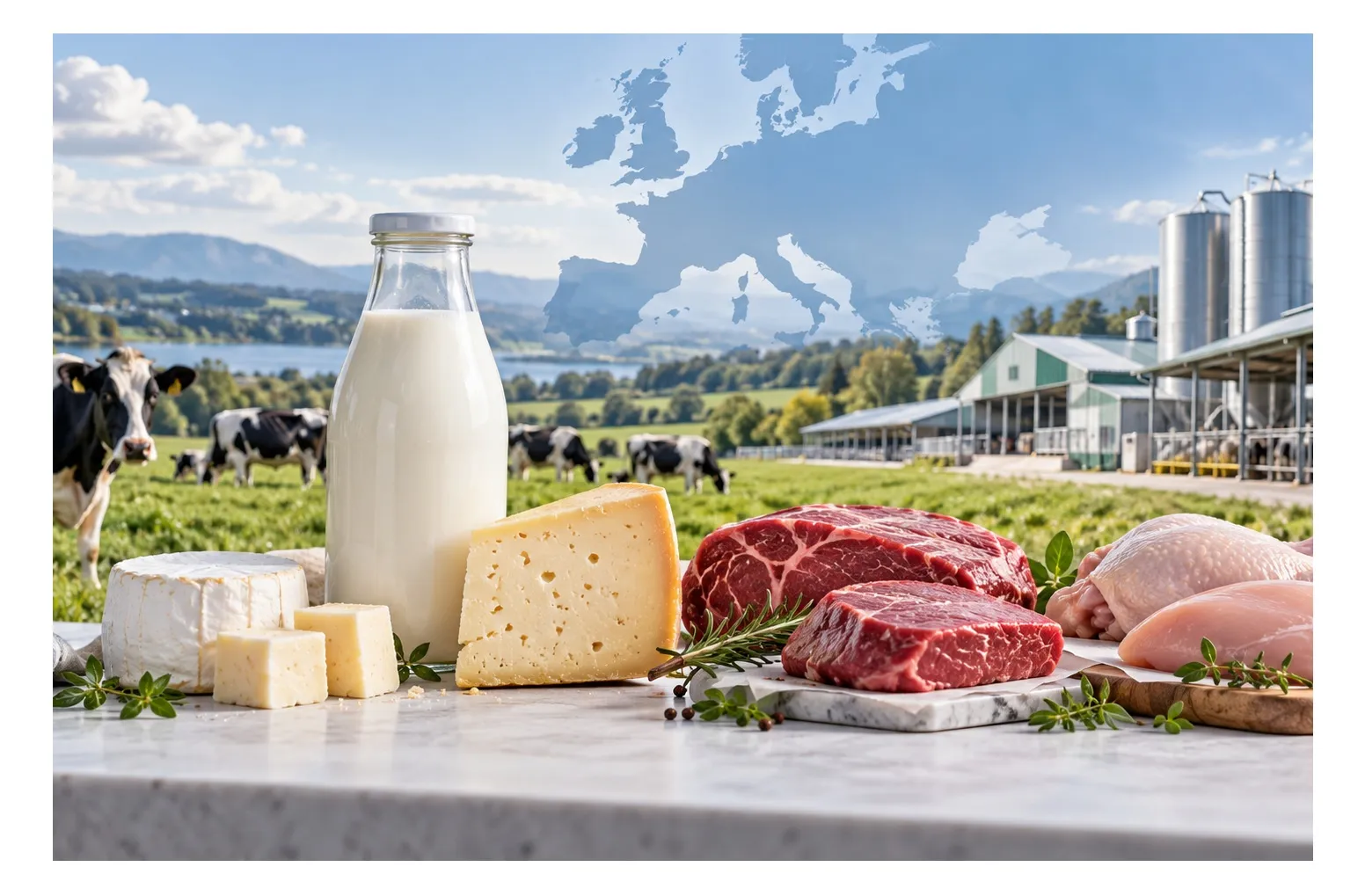
Romania has one of the most extensive agri-food systems in Central and Eastern Europe, supported by a broad agricultural structure, a diversified food industry, and investments that shape processing and distribution capacity. According to INS and Eurostat, the utilized agricultural area exceeds 12.5 million hectares, of which approximately 8.4 million hectares are arable land. This potential positions the country among Europe’s leading producers of sunflower, wheat, and corn, and the total value of agricultural production was estimated at over 22 billion euros in 2023.
The food industry represents the link that transforms agricultural resources into standardized, safe, and stable products. INS data indicates the existence of over 10,000 active companies in the food and beverage sector, and domestic production covers approximately 70% of the food consumed nationally. The processing segment maintained steady growth in 2024, with increases in meat production in industrial units and a rise in the quantities of cow’s milk collected by processors. At the same time, an intensification of raw milk imports can be observed—an element that highlights the gap between domestic collection capacity and the current needs of the industry.
Food balance sheets published by INS show that Romania covers a high proportion of its consumption of cereals, meat, and dairy products from domestic production, while certain categories—especially vegetables, fruits, and raw milk—depend to varying degrees on imports. This mixed structure is typical of agricultural economies in Europe, where climatic patterns, labor migration, and integration into the single market influence production dynamics.
However, the agri-food chain functions not only through production and processing, but also through infrastructure. AFIR investments in 2024, amounting to over 1.1 billion euros, reflect the sector’s strategic directions: farm modernization, development of storage facilities, expansion of processing capacities, and implementation of technologies for sustainable agricultural practices. The approximately 11,800 contracts financed in a single year indicate strong demand for modernization and confirm the need for robust infrastructure throughout the farm-to-fork chain.
Viewed as a whole, Romania’s agri-food system is in a stage where natural potential must increasingly be converted into added value. Agriculture provides volume, the food industry ensures transformation and standardization, and infrastructure investments create continuity and reduce vulnerabilities along the chain. Climate dynamics, market volatility, and competitive pressure within the EU underscore the importance of an integrated approach in which productivity, local processing, and modern logistics become central elements.
Romania produces a lot, but the real challenge remains the ability to transform this output into a resilient, predictable, and competitive system at the European level. The future direction depends on strengthening the food industry, modernizing farms, and maintaining the pace of investments—elements that can support a functional agri-food chain in an increasingly complex economic and climatic context.
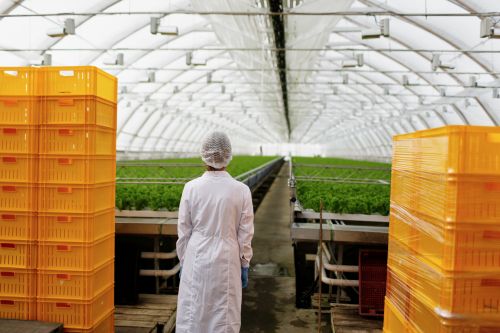
(Photo: Freepik)
Did you learn something new from this article?
Read also: