1263

Author
Meat.Milk
Share on


Published on
2025 November 06
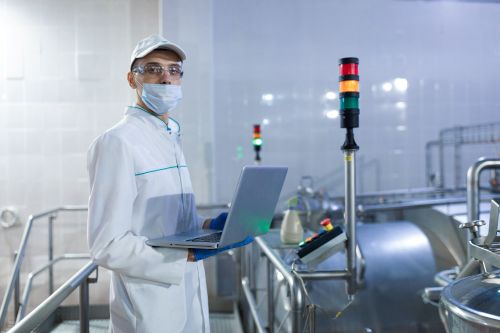
Smart Sensors Are Redefining the Dairy Industry
The dairy sector is undergoing a quiet yet profound technological revolution: the integration of smart sensors and real-time monitoring systems across milk collection, transport, and processing stages. The goal is not merely automation of quality control, but the achievement of complete traceability – from farm to shelf.
According to the International Dairy Federation (IDF, 2024), over 40% of European processors already use IoT sensors to measure key raw milk parameters such as temperature, pH, fat content, and bacterial contamination. These data are automatically transmitted to digital platforms, enabling rapid interventions and reducing technological losses.
The European Commission, through the Digital Food Systems 2030 programme, identifies sensor technology as a strategic priority for food safety. Under Regulation (EU) 2024/1372, dairy processors are required to electronically document every stage of the production chain.
In Romania, according to MADR, only 22% of dairy plants have implemented fully digital monitoring systems so far, but interest is growing. The new funding lines under the CAP Strategic Plan 2023–2027 support the acquisition of smart equipment and data analysis software, with grant intensities of up to 65%.
The OECD reports that the adoption of IoT technologies in the dairy industry can reduce product losses by 10–15% and optimise energy consumption by up to 20%. Moreover, the digitalisation of quality control enhances veterinary compliance and shortens response times in case of non-conformities.
The FAO emphasises that integrating these systems in small and medium-sized farms can strengthen regional competitiveness, narrowing the gap between large and small-scale producers.
For Romania, smart sensors represent more than a technological innovation – they are a mark of trust. In an increasingly demanding European market, quality control becomes the identity of an industry that aims not just to be present, but to be respected.
(Photo: Freepik)
Did you learn something new from this article?
Read also: