919

Author
Meat.Milk
Share on


Published on
2025 December 04
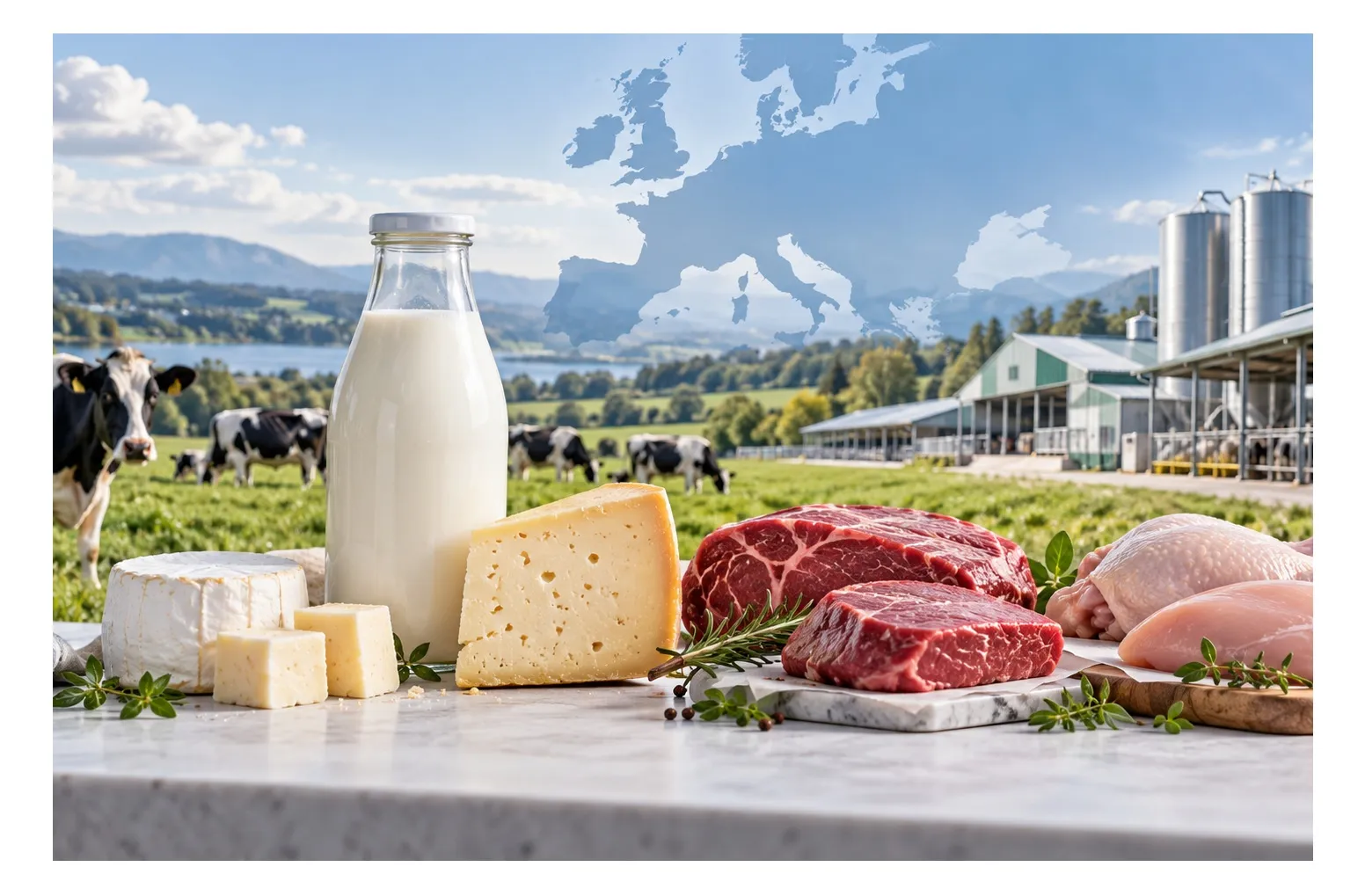
Recent developments in the dairy sector show that the European Union is entering a phase of structural consolidation, marked by a decline in the number of farms, rising productivity, and pressure on the availability of raw milk. Eurostat data for 2023–2024 confirm a consistent trend: small farms continue to disappear, while medium and large units concentrate production volumes, keeping overall output relatively stable. This dynamic also explains the growing variability in deliveries to processors across Member States, depending on farm structure, climate conditions, and production costs.
According to the European Commission’s Milk Market Observatory, differences between countries remain significant. Ireland, the Netherlands, and Germany have recorded strong performance, supported by high productivity and solid infrastructure. In contrast, some markets in Central and Southern Europe have reported fluctuations in collected volumes, partly due to feed cost pressures and the implementation of environmental standards. For processors, this variability increases the importance of stable contracts and medium-term planning with suppliers.
Consumption trends directly influence production structures. IDF reports confirm the growth of added-value categories: high-protein yogurts, fermented specialties, and matured cheeses. The UHT segment remains dominant in many markets due to its logistical stability, while fresh milk continues to occupy a niche highly sensitive to distribution and temperature compliance. These dynamics require processors to shift from volume-driven production models to flexible lines adapted to dynamic assortments and seasonal demand.
From a food safety perspective, DG SANTE reports for 2022–2024 indicate that temperature deviations during storage and transport are the main causes of non-compliance, especially for milk and fresh dairy products. Digitalised temperature monitoring and real-time traceability are becoming critical tools for operators working within complex logistics chains. At the same time, energy pressure and environmental standards are driving investments in efficient infrastructure, heat-recovery systems, and modernised equipment.
For the dairy industry entering 2025, competitiveness no longer depends solely on costs and volume but on the ability to integrate data, technology, and rigorous quality control. Processors capable of demonstrating supply stability, operational efficiency, and full compliance with European standards are better positioned in a market facing structural pressures and rising expectations from consumers and retailers.
(Photo: Freepik)
Did you learn something new from this article?
Read also: