1940

Author
Meat.Milk
Share on


Published on
2026 January 19

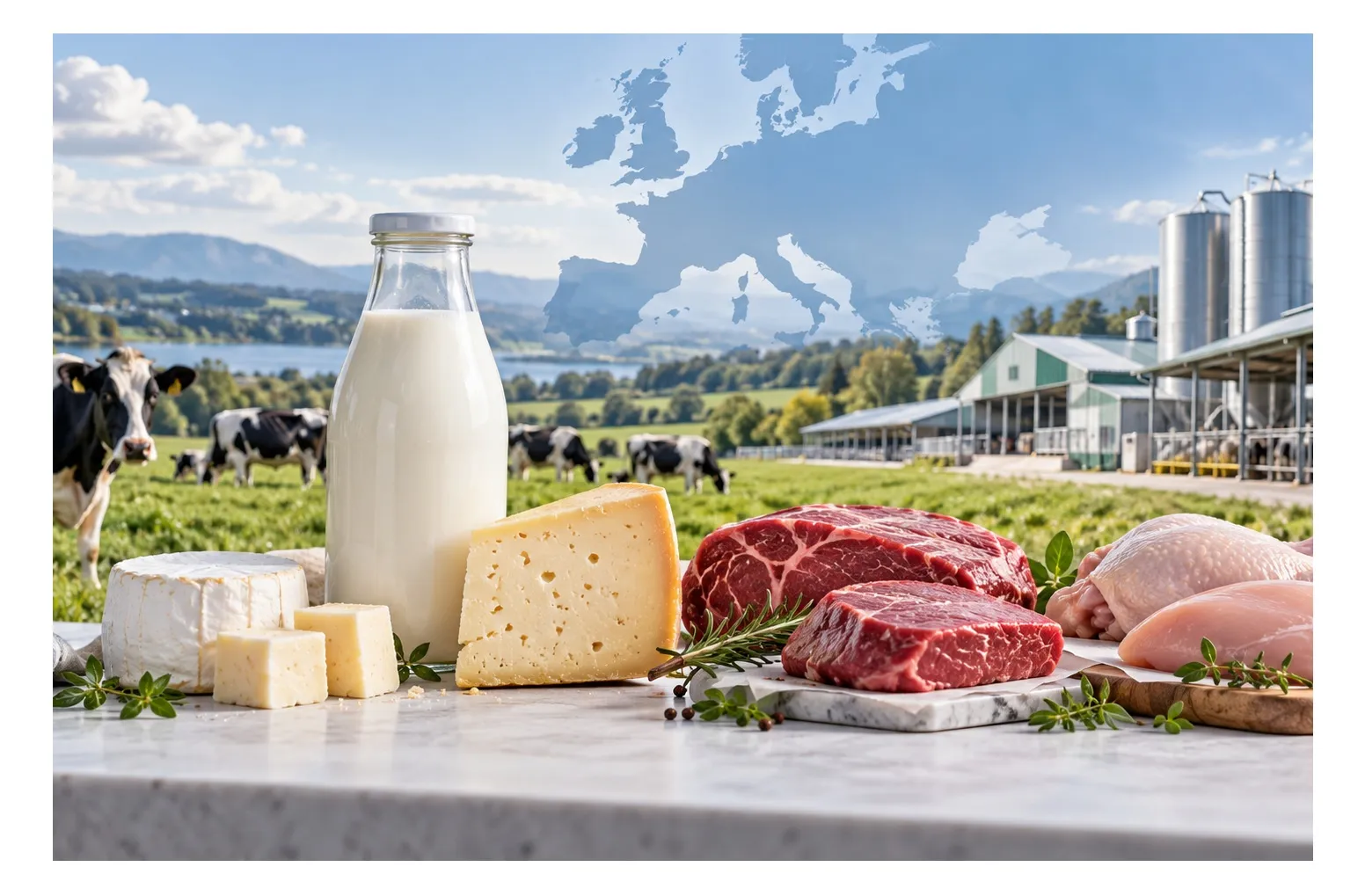
The signing of the EU–Mercosur agreement in Asunción was presented as a geopolitical and commercial success, yet for European agriculture—including Romania—the message sent to farms is a dangerous one: competitiveness risks being achieved through imports from outside the EU, rather than through the strengthening of internal production. While industry actors speak in terms of “markets” and “volume,” farmers across Member States point to a structural problem: the entry into the EU market of products that do not bear the same rules, costs, and controls.
In recent years, EU farmers have been pushed into an unparalleled compliance framework: environmental standards, traceability requirements, animal welfare rules, restrictions on active substances, CAP conditionalities, and constant administrative pressure. All of these obligations entail direct costs, reflected in production prices. At the same time, imports benefit from negotiated market access within a framework that accepts significant structural differences in production practices, controls, and cost structures. Put simply, the European farmer is required to produce “cleaner,” but at a higher cost, while competing products enter the market at lower prices.
The issue is not trade itself, but asymmetry. The EU is not creating an open market among equals, but a competition between two agricultural models operating on fundamentally different principles. For Romania, where livestock farming is recovering slowly and farms are highly vulnerable to volatility, the agreement may translate into additional price pressure, reduced incomes, and an accelerated exit of small and medium-sized farms from the market. In sensitive sectors, an increase in lower-priced imports can push the domestic market into an imbalance that is difficult to correct.
In this context, European farmers’ opposition is essentially economic. Farmers are not calling for protectionism, but for equal rules: if the EU imposes strict standards on its own producers, imports must comply with comparable requirements, backed by credible controls and enforceable sanctions. Without this symmetry, the EU–Mercosur agreement risks becoming a burden-shifting mechanism, in which European production bears the cost while the European market consumes the price advantage.
For Romania, a realistic approach means defending farmers through sector-by-sector impact assessments, clear conditionalities on access for sensitive products, support measures for livestock farming and processing, and a firm political stance in the Council and in dialogue with the European Parliament. Otherwise, the agreement will be perceived within the agricultural community not as development, but as yet another signal that agriculture can be sacrificed for commercial objectives that do not return value to farms.
(Photo: Freepik)
Did you learn something new from this article?
Read also: