895

Author
Meat.Milk
Share on


Published on
2025 December 19
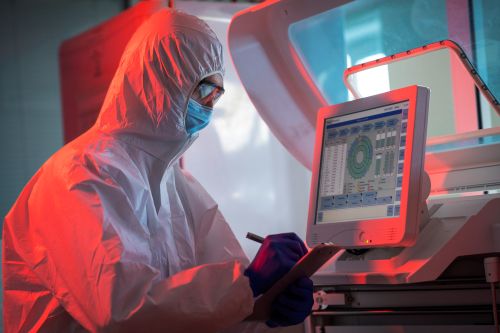
Optical sensors are becoming an essential tool in the meat industry for quality standardization and the reduction of batch-to-batch variability. According to FAO data and technical analyses published by the European Commission, over 40% of large processing plants in the EU already use NIR (Near-Infrared) sensors to measure meat composition—fat, protein, and moisture—directly on the processing line. In facilities with a low level of digitalization, these values are analyzed manually, increasing the risk of non-uniformity.
Eurostat shows that the use of optical technologies reduces fat content variability between batches by 10–15%, and in modernized plants, technological losses can decrease by 2–3 percentage points. Romania remains below the European average: less than 20% of small and medium-sized units use integrated sensors, according to data from the National Institute of Statistics and technical assessments by DG SANTE.
NIR sensors enable real-time adjustment of the cutting and portioning process, leading to improved uniformity and higher yield. In addition, the technology reduces reliance on visual inspection, which FAO identifies as one of the main sources of variability in traditional processing units.
For 2025, the European Commission estimates that the adoption of optical systems will become a competitiveness criterion, as the traceability of physico-chemical parameters is essential for exports and for contracts with European retailers.
(Photo: Freepik)
Did you learn something new from this article?
Read also: