479

Author
Meat.Milk
Share on


Published on
2026 October 08
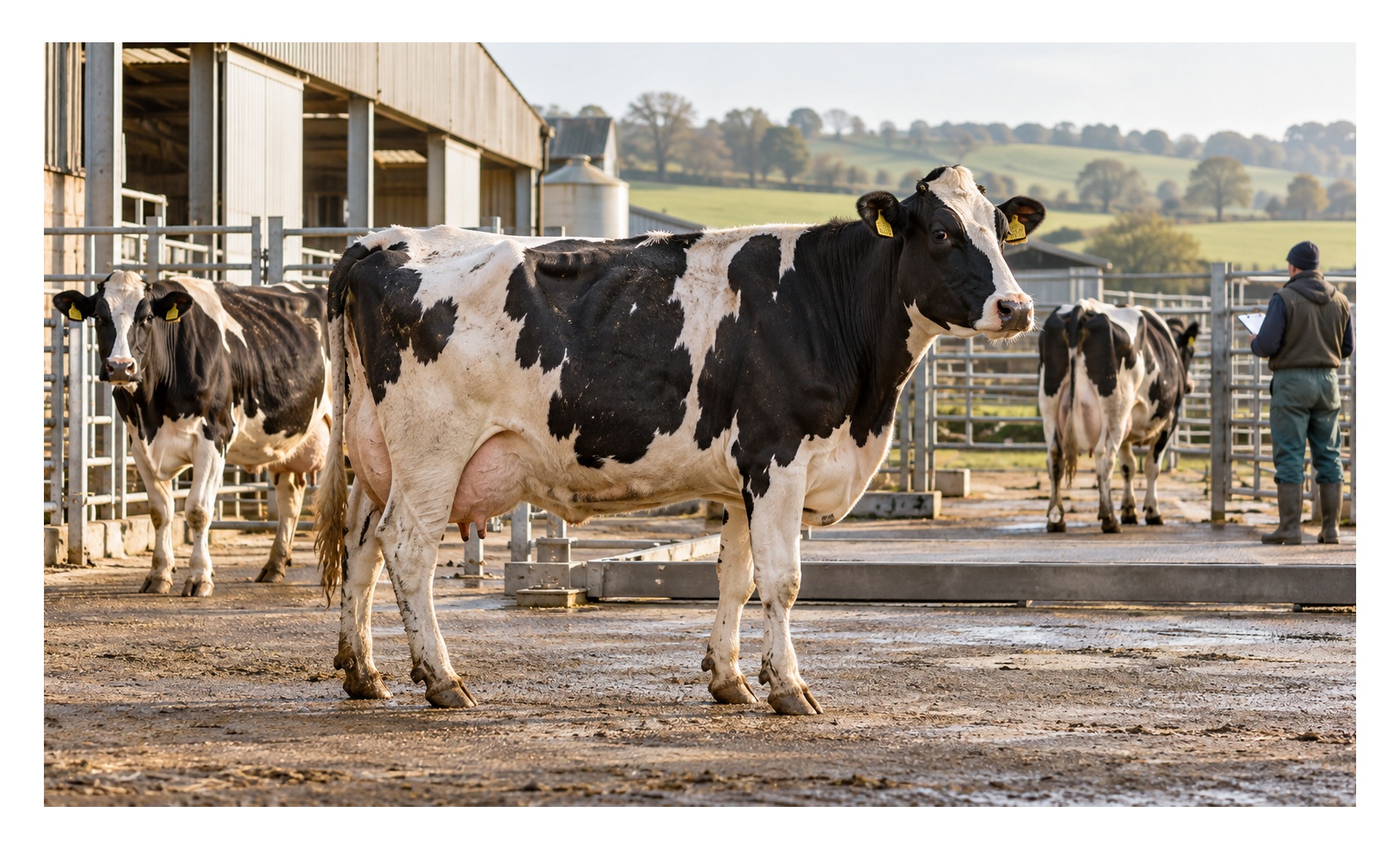
Removing a cow from the dairy herd opens up another stage of commercial use: beef production. For the farmer, the timing of the sale and the cost of keeping the animal matter. For the buyer, the assessment continues with carcass weight, conformation and fat cover. The link between the two sectors is therefore built on specific characteristics of the raw material.
Animal category is not a quality grade
The European classification scale established by Regulation (EU) No 1308/2013 assigns carcasses of female animals that have calved to category D. This identifies an animal category without, on its own, determining the commercial value of each carcass.
Conformation is assessed separately, based on the development of carcass profiles, particularly the round, back and shoulder. The classes are S, E, U, R, O and P. Fat cover is assessed on a scale from 1 to 5. Consequently, two cows in the same category can yield carcasses with different characteristics.
Preparation for delivery must be economically justified
Teagasc, Ireland’s Agriculture and Food Development Authority, emphasises that the sales strategy must be tailored to each farm. Additional milk revenue and any potential increase in carcass value must be weighed against feed, upkeep and labour costs.
An example presented by the authority illustrates the importance of body condition. Among cows in the 550–620 kg liveweight range, the proportion meeting the market specification examined was 11% at a body condition score of 3.0 or below and 41% at a score of 3.5 or above. These results relate to the conditions studied in Ireland, rather than a universal requirement or a price benchmark for Romania.
The intended use of the meat requires further assessment
Carcass classification does not conclude the assessment for processing. Research on cull cows also examines characteristics such as tenderness and the response to ageing. A study published in Livestock Science in 2024 recommends, under the experimental conditions, ageing for 14 days to improve meat tenderness.
For farmer–processor collaboration, the practical implication is to establish requirements before delivery and assess the meat’s characteristics before deciding on its use. Cull cows warrant individual assessment: the animal category provides context, while the carcass characteristics and the meat’s behaviour during processing complete the basis for deciding how best to utilise it.
Did you learn something new from this article?
Read also: